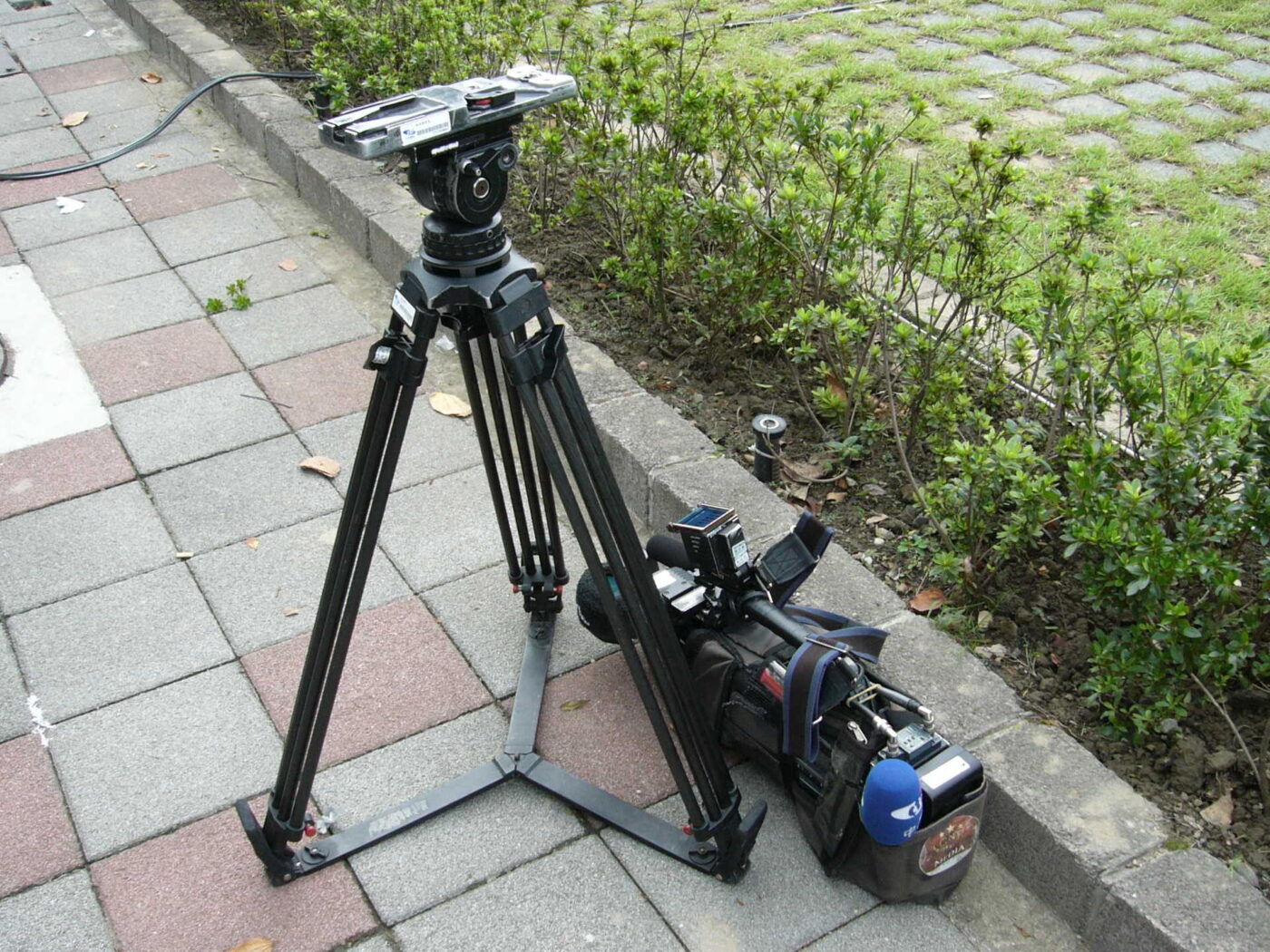
A tripod is the least exciting thing a camera owner buys and one of the few that can last 20 years. The choice has barely changed in a decade: aluminum is cheaper and heavier, carbon fiber is lighter and dearer, and everything else is leg locks, load ratings and the head on top.
What has changed is the market underneath. The largest branded supplier of camera supports has been shrinking and selling consumer brands, US tariffs have unsettled distributors, and one US maker raised prices for the first time in two years. That affects which end of the shelf is worth your money in 2026.
Trend Signal
32/100 Weak momentum
- Emerging
- Rising
- Mainstream
- Peaking
- Cooling
Camera support sales are falling and the biggest branded supplier is shrinking
Videndum, which owns Manfrotto, Gitzo and Lowepro, reported that its Media Solutions division’s external revenue fell 18% in 2025 and named US tariffs as a cause of distributor caution; it sold the consumer JOBY brand in September 2025.
Our editorial reading of the cited data, not a forecast. How it is scored
By the numbers
- 18%Videndum Media Solutions external revenue in 2025 against 2024Videndum
- 19%Videndum group revenue in 2025 against 2024, on a continuing basisVidendum
- 2.5%US general duty on tripods of aluminum under HTS 9620.00.70; carbon ones enter freeUSITC
- +5%Rise in the Really Right Stuff Versa-34 list price from December 1, 2025Digital Camera World
The market behind the price tag
Videndum plc owns Manfrotto, Gitzo, Lowepro and Rycote, which covers a large share of the branded tripods, bags and mounts sold to photographers. Its 2025 annual report shows group revenue down 19% and its Media Solutions division down 18%, with a blunt explanation: “The US tariffs created market uncertainty and caution from our distributors.” The company sold the consumer-oriented JOBY brand in September 2025 and cut costs through restructuring during the year.
The trend did not reverse in 2026. CineD reported on August 5, 2026 that Videndum’s revenue from continuing operations fell 4% in the first half of the year, that Media Solutions was the division that dragged, and that the board kept its material uncertainty warning about its ability to continue as a going concern.
What does that mean for a buyer? Fewer new consumer models from the legacy brands, more of the shelf filled by lower-priced entrants, and, in the annual report’s own words about its premium programmes, a push for “price integrity and share resilience against lower-priced alternatives.” The premium end is holding its prices rather than chasing the cheap end down.
This is a category where the established brands are retreating rather than competing on price.
What carbon fiber actually buys
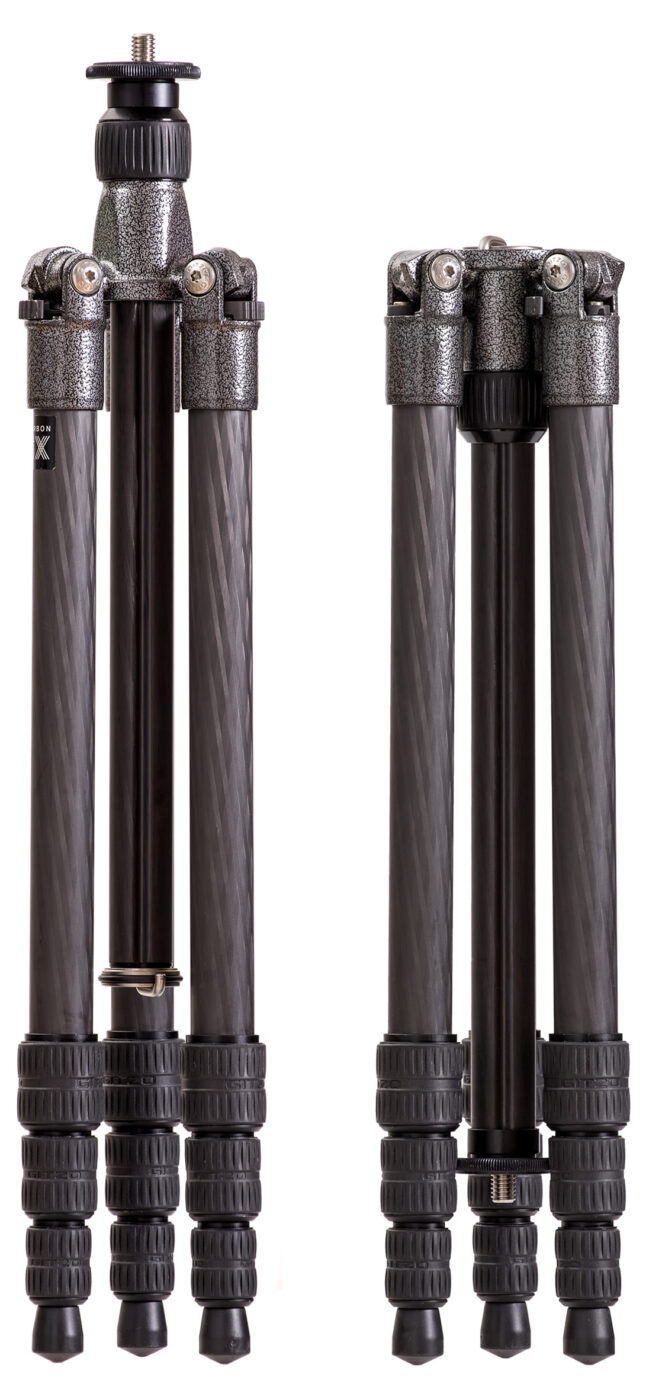
Carbon fiber legs weigh less than aluminum legs of the same rigidity, transmit less vibration and stay closer to ambient temperature in the cold, which matters if you handle legs with bare hands in winter. Aluminum costs less, dents rather than cracks, and does not care about being knocked against rocks.
The US tariff schedule reflects the split in an oddly direct way. Heading 9620 covers monopods, bipods, tripods and similar articles, and then splits them by material: those of graphite or other carbon enter free of general duty, those of aluminum pay 2.5%, of iron or steel 2.9% and of plastics 5.3%. Accessories for photographic cameras of heading 9006 pay 5.8%. Those rates are small next to the metals tariffs on the materials themselves, but they show that material choice has been a customs question for years.
The practical translation is simple. If you carry a tripod on your back for hours, carbon fiber buys comfort you will notice. If it lives in a studio, a garage or a car trunk, aluminum buys the same stability for less money and takes abuse better.
The specs that decide whether a tripod works

One thing about a tripod is standardized: ISO 1222:2010, the fourth edition, published in June 2010 and, in ISO’s words, last reviewed and confirmed in 2025, “specifies the screw connections used between a camera and a tripod or other accessories.” That is the whole scope. Payload ratings, leg-lock durability and how much a center column wobbles are not covered by it, which is why those numbers are hard to compare across brands.
Read the physical measurements instead, because they do not depend on anyone’s testing. Folded length decides whether it fits your bag or a carry-on. Maximum height without raising the center column is the height you can actually use, since a raised column is the least stable part of any tripod. Leg sections trade packed size against setup time and rigidity: three sections are faster and steadier, four or five pack smaller.
The head is a separate purchase, even when it is bundled. Ball heads are quick for stills, fluid heads are what make panning look intentional in video, and the quick-release plate standard on the head decides which other gear you can swap onto it. Check what plate the head uses before buying, not after.
- Weigh your heaviest camera and lens, then compare it to the stated payload with a wide margin.
- Check the folded length against the bag you already own.
- Twist locks are faster to clean after sand or grit; lever locks are faster to operate with gloves.
- A center column hook lets you hang a bag for stability in wind.
Where prices are heading
Tripod prices are moving for reasons that have little to do with tripods. Really Right Stuff, which builds in Utah, emailed customers that it would raise tripod prices from December 1, 2025, giving its Versa-34 as the example: a list price of $1,250 rising to $1,315, about 5%. Digital Camera World reported the increase on November 11, 2025, quoted the company saying it was raising prices “for the first time in two years” because of “rising inflation and production costs,” and noted the brand manufactures in the US rather than importing.
Imported tripods face a different pressure. Section 232 duties of 50% sit on aluminum and steel articles and on the derivative articles listed in chapter 99 of the tariff schedule; heading 9620 is not on those lists, so what reaches a tripod is the cost of metal dutied further upstream rather than a 50% duty on the finished product. Tripods that are products of China do carry an added 25% under the separate Section 301 action on Chinese goods, which lists every 9620 line, subject to any exclusion granted by the US Trade Representative. A shrinking market with rising input costs usually means fewer models, longer gaps between refreshes and thinner discounting rather than dramatic price rises.
For most buyers that argues against waiting for a sale on a specific model and in favor of buying a well-specified tripod when you find one, since discontinued models do not come back.
Who should buy which
Buy carbon fiber if you hike, travel by air often, or already own a camera and lens heavy enough that every saved pound matters. The premium is real, and in 2026 it is not getting smaller.
Buy aluminum if the tripod mostly stands still, if it will be handled by other people, or if you are not yet sure what you shoot. Put the money you save into a better head, which is the part you touch on every shot.
Buy a tabletop or travel model as a second tripod rather than a first one. They are excellent for desks, vlogging and tight spaces, and frustrating as the only support you own.
What to watch next
- Videndum’s next results, for whether group revenue falls for a fourth year running.
- Whether the legacy brands keep selling off consumer lines, which is what thins out mid-priced choices.
- Discontinued model notices from the big brands, since a tripod you like can vanish without a replacement.
Where to start
Paid links: we earn a commission if you buy through the buttons below, at no extra cost to you. As an Amazon Associate I earn from qualifying purchases.
Tripod types compared on the things a spec sheet rarely spells out
| Product type | Good fit for | Where to look |
|---|---|---|
| Carbon fiber travel tripod | Fits travel and hiking | See listings on AmazonOpens Amazon search results, not one listing: check the model on the product page. |
| Aluminum tripod with fluid head | Fits video on a budget | See listings on AmazonOpens Amazon search results, not one listing: check the model on the product page. |
| Tabletop tripod | Fits desks and vlogging | See listings on AmazonOpens Amazon search results, not one listing: check the model on the product page. |
Product types that fit the trend described above, not tested models. Check the exact listing before you buy. How we pick them.
Carbon fiber travel tripod
Where to look: Amazon
The type worth the premium if you carry it. Compare folded length and maximum height with the center column down, which is the height you can use without losing stability.
- Lighter for the same rigidity
- Packs shorter with more leg sections
- Costs more than aluminum
- More leg sections means slower setup
Aluminum tripod with fluid head
Where to look: Amazon
For video the head matters more than the legs. Check whether the fluid head has real drag adjustment and whether it can be replaced later on a standard mount.
- Fluid head makes pans usable
- Takes knocks without cracking
- Heavier to carry any distance
- Bundled heads vary in quality
Tabletop tripod
Where to look: Amazon
A good second support and a poor only support. Match the screw thread to your camera or phone mount and keep the payload well under the claim.
- Fits in a bag pocket
- Works as a handheld grip
- Low maximum height
- Easily overloaded by big lenses
More: Creators and Content trends and how the Trend Signal is scored.
Sources
- Annual Report and Accounts 2025 — Videndum plc
- Videndum H1 2026 Results, Cine Brands Outperform While the Going-Concern Warning Stays — CineD
- Harmonized Tariff Schedule heading 9620, monopods, bipods, tripods and similar articles — USITC
- ISO 1222:2010, Photography — Tripod connections — ISO
- This American-made tripod brand is increasing prices next month — Digital Camera World
Questions readers ask
Is a carbon fiber tripod worth the extra money?
It depends on whether you carry it. Carbon fiber legs are lighter for the same rigidity and damp vibration better, which matters on hikes and for air travel. For a tripod that mostly stays in one room, aluminum delivers the same stability for less and survives knocks better.
Are tripod specifications standardized?
Only the screw. ISO 1222:2010, the fourth edition of June 2010, which ISO records as confirmed in 2025, specifies the screw connections used between a camera and a tripod or other accessories. Payload ratings and leg-lock durability are outside its scope, so those figures are each maker’s own.
Why are fewer tripod models appearing from the big brands?
The largest branded supplier is shrinking. Videndum, which owns Manfrotto, Gitzo, Lowepro and Rycote, reported group revenue down 19% in 2025 and Media Solutions down 18%, sold the JOBY brand on September 3, 2025, and per CineD carried a going concern warning into its August 2026 half-year results.
Do tariffs make tripods more expensive?
Partly, and less directly than you would think. Under US heading 9620 the general duty runs from free for tripods of graphite or carbon to 5.3% for those of plastics. Heading 9620 is not on the Section 232 derivative aluminum or steel lists, so the 50% metals duty reaches a tripod through the cost of its inputs; tripods that are products of China carry an added 25% under Section 301. Videndum also said US tariffs made its distributors cautious in 2025.