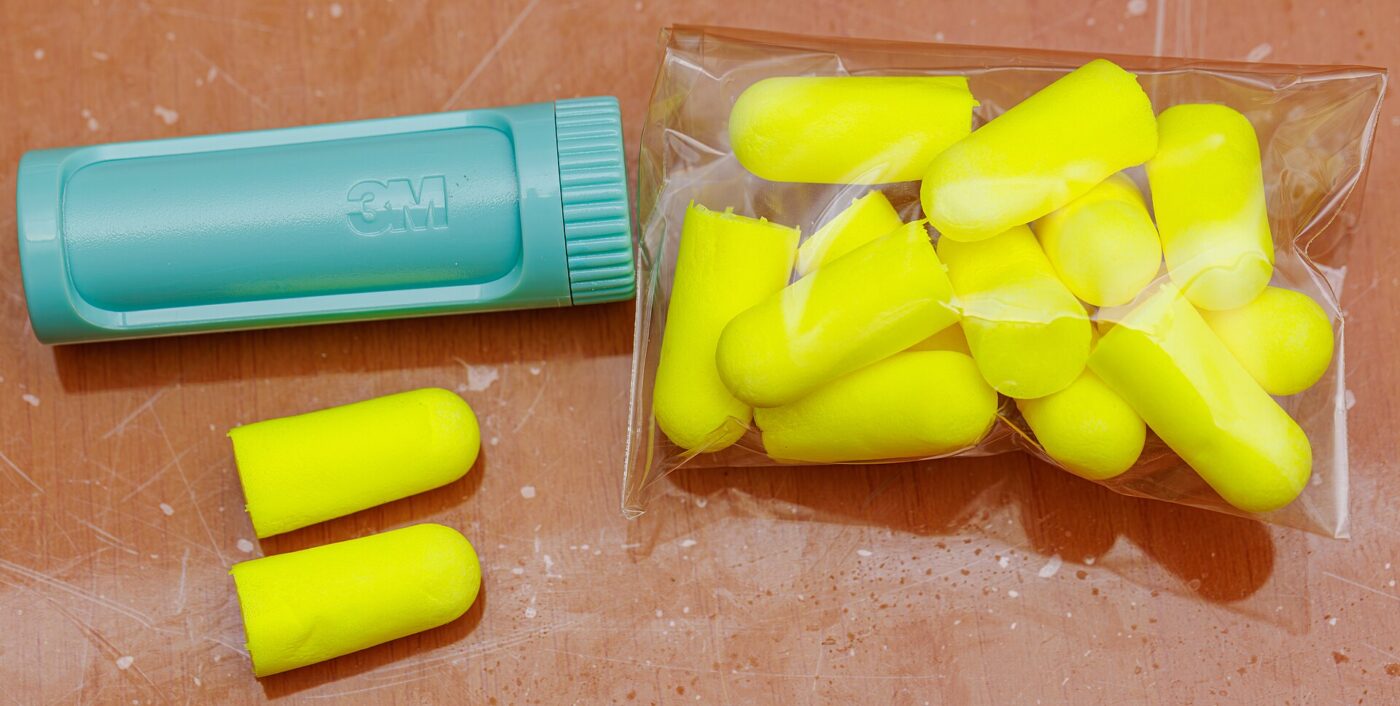
Pick up any box of foam earplugs in an American store and you will find a panel with two letters, a large number and the phrase when used as directed. It looks like marketing. It is a federal label, its size, type sizes and wording specified down to the point, and the method behind it was published in 1974.
That matters in 2026 because the category changed while the label did not. Filtered concert plugs, custom-molded plugs, sleep earbuds and level-dependent protectors all compete on a rating scale designed for foam and muffs.
Trend Signal
38/100 Steady momentum
- Emerging
- Rising
- Mainstream
- Peaking
- Cooling
A label rule last amended in 1980, and a replacement proposed in 2009 that never landed
The EPA issued the hearing protector labeling rule at 44 FR 56139 on September 28, 1979 and last amended the labeling sections on February 6, 1980; its August 2009 proposal to replace the single-number rating has not been finalized.
Our editorial reading of the cited data, not a forecast. How it is scored
By the numbers
- 1979Year the EPA issued the hearing protector labeling rule at 40 CFR part 211, subpart BeCFR
- 0 to 30Rating range the required label statement still describes for existing hearing protectorseCFR
- 2009Year the EPA proposed replacing the single rating with a range; no final rule has followedFederal Register
- 27 millionUS workers NIOSH estimates are exposed to hazardous noise each yearNIOSH
What the label is legally required to say
The rule lives at 40 CFR part 211, subpart B, sourced to 44 FR 56139 of September 28, 1979 and applying to devices manufactured on or after September 27, 1980. It defines a hearing protective device broadly: anything worn on the head or in the ear canal and sold wholly or in part on its ability to reduce sound entering the ear.
The label is prescribed area by area. Area A must state Noise Reduction Rating. Area B must state the NRR in decibels for that model, and no greater than the value produced by the computation method in the rule. Area C must carry a specific sentence: that the range of Noise Reduction Ratings for existing hearing protectors is approximately 0 to 30, with higher numbers denoting greater effectiveness. At the bottom of the A-B block must be the phrase when used as directed.
Even the dimensions are fixed: at least 3.8 by 5.0 centimeters, with minimum type sizes per area, affixed to the device or its carrying case and to the packaging if that label is not visible at the point of sale. The labeling sections were last amended at 45 FR 8275, February 6, 1980.
The panel on the box is a federal form, not a marketing claim, and the form has not changed since 1980.
The test behind the number

The rule names the measurement method. ANSI S3.19-1974 is described in the regulation as a revision of the older ANSI Z24.22-1957 procedure, using one-third octave band stimuli under diffuse, reverberant acoustic field conditions. The NRR is a single-number noise reduction factor in decibels, derived by a technique that accounts for variation across noise spectra, for fit variability, and for mean attenuation at the test frequencies. At 40 CFR 211.206-1 the rule strikes subject fit and permits only experimenter fit, so the figure describes a protector seated by a trained tester, not by the wearer.
The rule requires more than the number, and this is the part buyers never see. The supporting information must include the mean attenuation and standard deviation for each test frequency, plus the NRR calculated from them. It must also carry two sentences the rule writes out: that improper fit will reduce the device’s effectiveness, and that the NRR is based on continuous noise and may not indicate the protection attainable against impulsive noise such as gunfire. For muffs with several headband positions, the worst-case NRR goes on the label and the rest in that insert.
The rule also dictates how the number is used. The required statement says the level of noise entering the ear, when the protector is worn as directed, is closely approximated by the A-weighted environmental noise level minus the NRR, with a worked example at 92 dBA. It cautions that where noise is dominated by frequencies below 500 Hz, the C-weighted level should be used.
Why the rule has not changed since 1979
The EPA tried. On August 5, 2009 it published a proposed rule, Product Noise Labeling Hearing Protection Devices, whose abstract states that the standards had not been amended since 1979 and that technologies had evolved in the interim. A Federal Register search for documents citing 40 CFR part 211 returns exactly two: that proposal and a related one on August 21, 2009.
The agency fact sheet is direct about the cost. It says the revisions would produce a new generation of significantly improved devices precluded from the marketplace as hearing protectors by the 1979 requirements, and names the types the old rule cannot handle: custom-molded earplugs, sound restoration devices, communication headsets and active noise reduction devices.
The proposed label differed in substance. Instead of one number, Area B would have carried a range showing the lesser and greater levels of protection achievable when the device is used as instructed, with recurrent testing over a product life and relabeling whenever a rating shifted by at least 3 decibels. None of it took effect.
A range on the box would tell a shopper more than a single number, and it was proposed in 2009.
How to read the number when you are actually shopping
Start with what the number is: a laboratory result under a diffuse sound field, reduced to one figure. The regulation builds fit variability and a three-decibel spectral-uncertainty deduction into the computation, a tacit admission that the same plug performs differently in different ears.
Second, treat a high number as a ceiling rather than a promise, because the rule itself does. It caps the label at the computed value and requires the warning that improper fit will reduce effectiveness. Products advertising ratings above the 0 to 30 range the label must quote are not breaking the rule, since that sentence describes the market of 1979, but a 33 deserves the skepticism due any lab figure.
Third, use the supporting information. If an insert gives mean attenuation by frequency, you can see whether a plug works mostly on high frequencies, the usual pattern for foam, or evenly across the band, which is what filtered plugs are sold on. That is the difference between muffling a room and cutting a concert cleanly.
- The NRR on a muff package is the worst-case figure across headband positions.
- For low-frequency noise the rule says to use C-weighted levels, not the A-weighted subtraction.
- The measurement uses a tester-fitted protector, so the label is a ceiling, not a field result.
Choosing for sleep, travel and loud rooms
For sleep, the question is not the headline rating but whether the plug stays seated all night and whether it presses when you lie on your side. Low-profile foam and small silicone or wax plugs both address that, and the printed differences between them matter less than the seal. The EPA background text lists sleep alongside concerts and workplaces among the uses.
For travel and open-plan rooms, filtered reusable plugs sit mid-range by design: they cut level while keeping speech intelligible, which is why their printed ratings look low next to foam — the clearest example of why one number flattens a category.
For anything genuinely loud, the numbers are published. NIOSH sets its recommended exposure limit at 85 dBA over an eight-hour workday, estimates that about 27 million US workers are exposed to hazardous noise each year, and reports that about one in nine of the US working population has hearing difficulty. If a home project reaches that territory, muffs are the cheap part of the job.
What to watch next
- Whether the EPA returns to the 2009 proposal, which would put a range on the package instead of one number.
- Whether more listings publish the per-frequency attenuation data the rule already requires in the supporting information.
- Whether electronic and level-dependent protectors keep arriving without a label category that fits them.
Where to start
Paid links: we earn a commission if you buy through the buttons below, at no extra cost to you. As an Amazon Associate I earn from qualifying purchases.
Hearing protection types compared on how the rating behaves
| Product type | Good fit for | Where to look |
|---|---|---|
| Disposable foam earplugs | Fits a deep seal in the canal | See listings on AmazonOpens Amazon search results, not one listing: check the model on the product page. |
| Reusable filtered earplugs | Fits repeat use and travel | See listings on AmazonOpens Amazon search results, not one listing: check the model on the product page. |
| Over-ear hearing protection earmuffs | Fits fast on and off | See listings on AmazonOpens Amazon search results, not one listing: check the model on the product page. |
Product types that fit the trend described above, not tested models. Check the exact listing before you buy. How we pick them.
Disposable foam earplugs
Where to look: Amazon
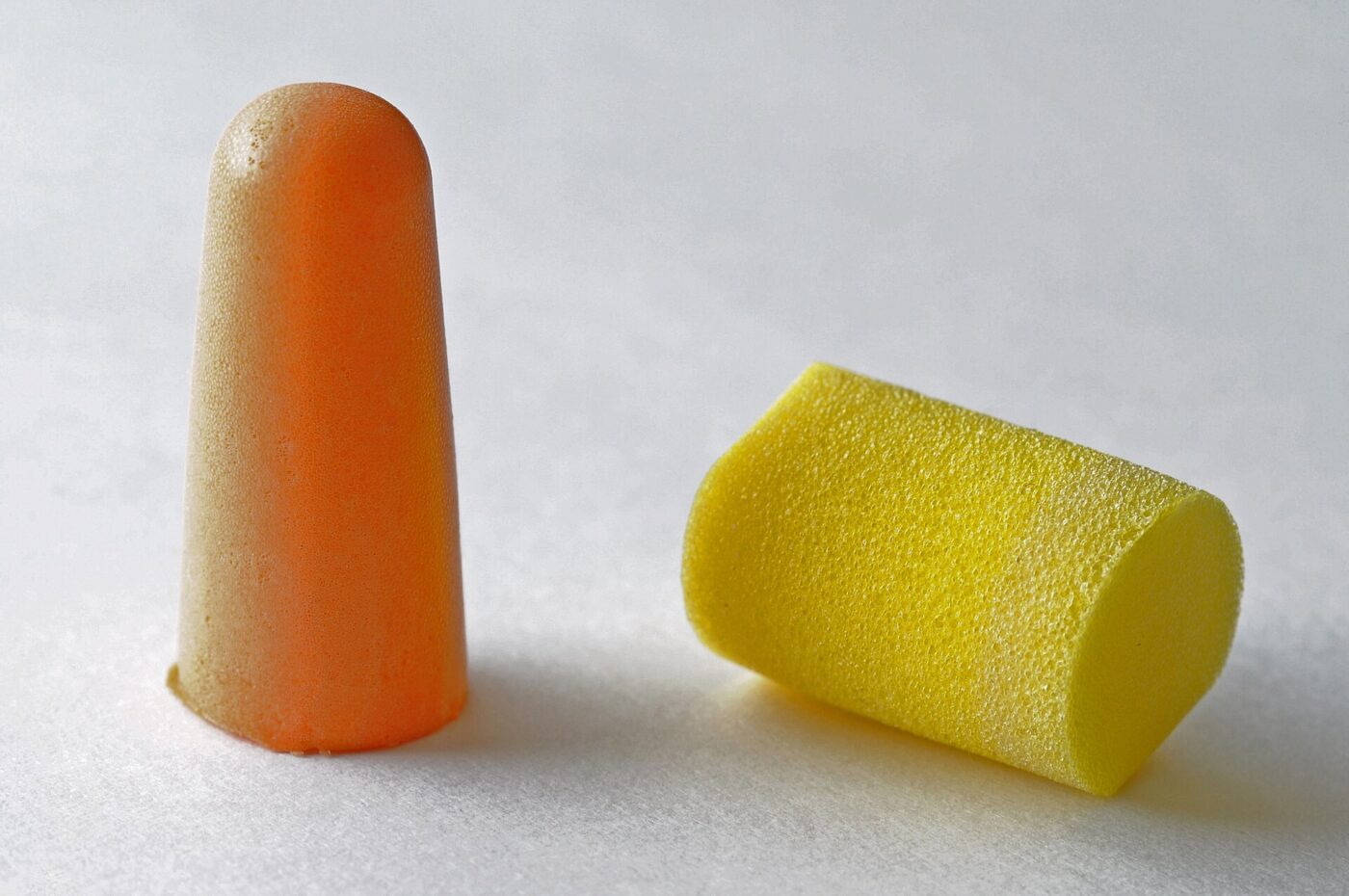
Foam is what the 1974 test method was built around, so the printed number describes this type best. The variable is you: the rating assumes a deep insertion, and a half-seated plug gives back much of it.
- Highest printed ratings in the category
- Cheap enough to keep everywhere
- Rating depends on the roll and insert
- Muffles speech along with noise
Reusable filtered earplugs
Where to look: Amazon
These are the products the single-number label serves worst. A filtered plug cuts level evenly rather than maximally, so its rating understates what it is for. Look at the per-frequency attenuation instead.
- Keeps speech intelligible
- Washable and long-lived
- Printed ratings look low next to foam
- Tip size decides the seal
Over-ear hearing protection earmuffs
Where to look: Amazon
Muffs are where the rule is most explicit: if the headband can be worn in more than one position, the label shows the worst-case rating and the better positions appear only in the insert.
- No insertion technique to get wrong
- Easy to share or hand over
- Label carries the worst-case band position
- Bulky and warm for long sessions
More: Health and Wellness trends and how the Trend Signal is scored.
Questions readers ask
What does NRR mean on earplugs?
The Noise Reduction Rating is a single-number noise reduction factor in decibels, defined in 40 CFR part 211, subpart B and measured under ANSI S3.19-1974. The regulation says it accounts for variation across noise spectra, fit variability, and mean attenuation at the test frequencies.
Why does the package say the range is 0 to 30?
Because the rule requires it. Area C of the label must state that the range of Noise Reduction Ratings for existing hearing protectors is approximately 0 to 30, with higher numbers denoting greater effectiveness. That sentence dates to the rule issued September 28, 1979.
Can I just subtract the NRR from the noise level?
That is the calculation the rule prints in the supporting information, using the A-weighted environmental level, with a worked example at 92 dBA. It describes a laboratory result: the rule measures with the protector fitted by the tester, and requires the package to state that improper fit will reduce effectiveness. The same statement cautions that where noise is dominated by frequencies below 500 Hz, the C-weighted level should be used instead.
Has the label ever been updated?
No. The EPA published a proposed rule on August 5, 2009 to revise the labeling standards, noting they had not been amended since 1979, with a related proposal on August 21, 2009. A Federal Register search for documents citing 40 CFR part 211 returns only those two, so the 1979 rule still governs. The proposal would have replaced the single number with a range showing the lesser and greater protection achievable.