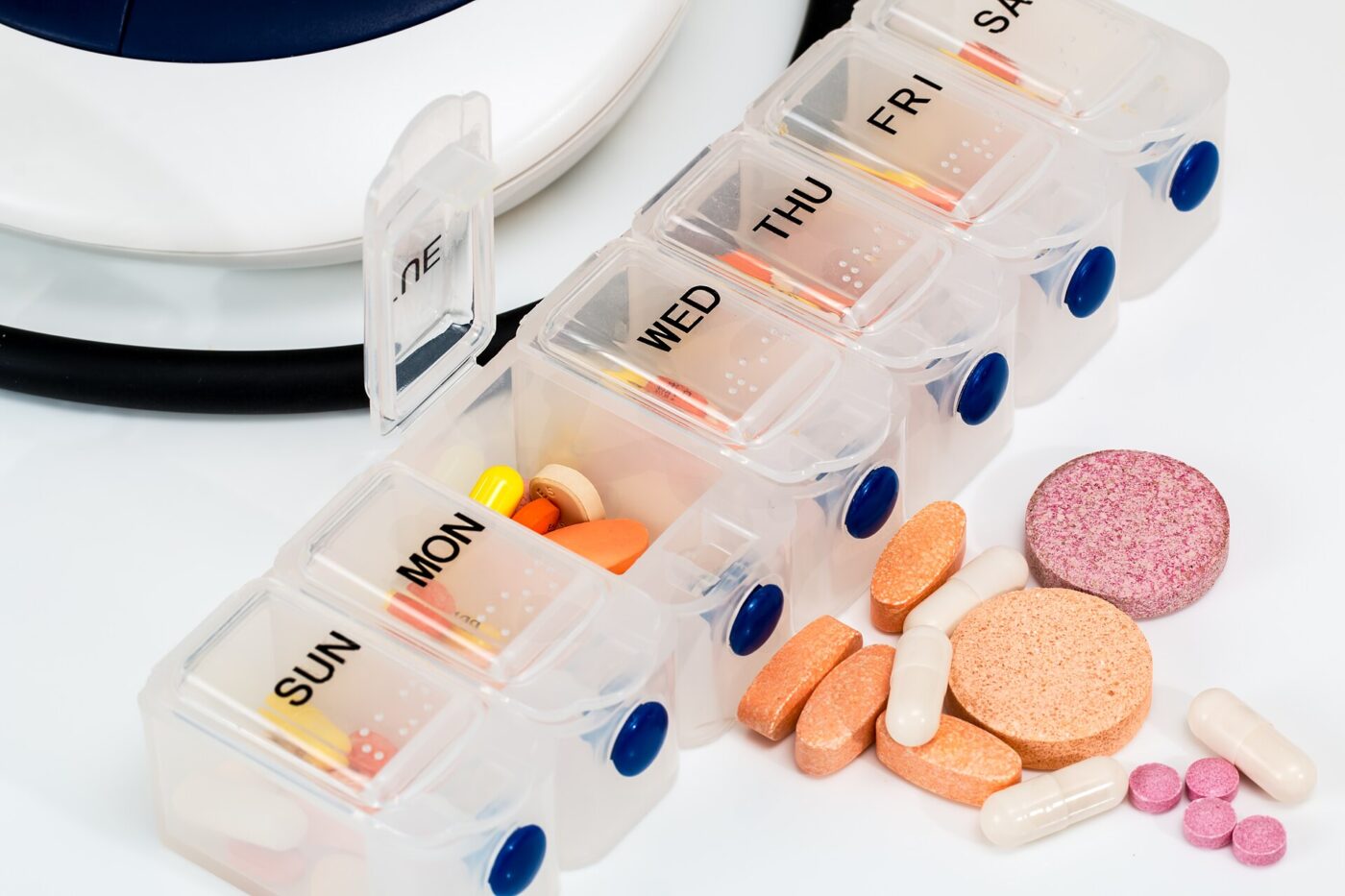
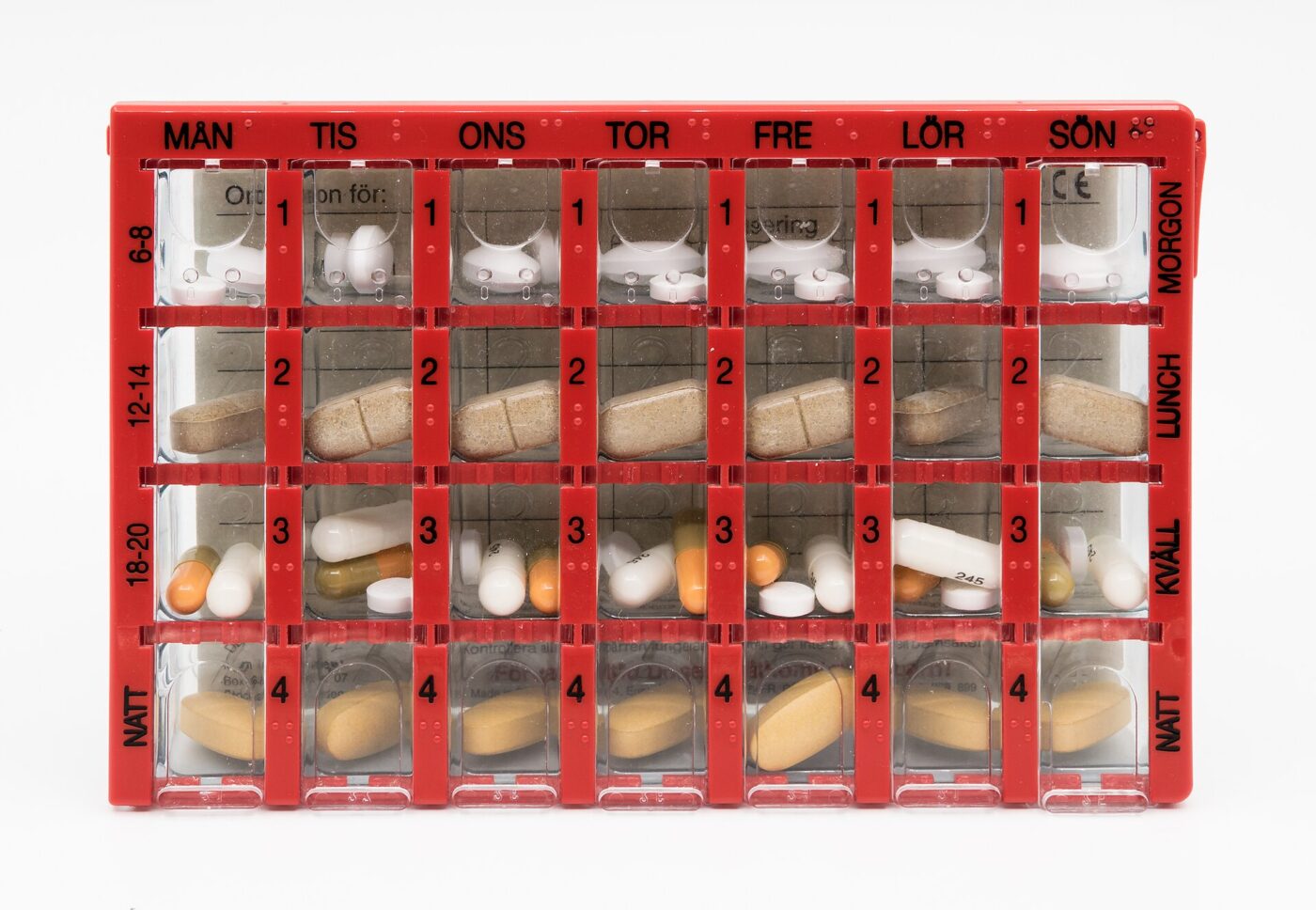
A prescription bottle is one of the most heavily tested objects in an American house. Before that cap can be sold, it has to survive panels of preschoolers and then be opened and properly reclosed by a panel of 100 adults between 50 and 70 years old. The weekly organizer next to it on the counter, the one people tip a week of pills into every Sunday, has to survive nothing at all.
This is not a loophole anybody hid. The Poison Prevention Packaging Act regulates the packaging a regulated household substance is supplied in, and an empty organizer bought separately is not that package. The result is a whole product category sitting outside the rule that governs the container it replaces.
Trend Signal
42/100 Steady momentum
- Emerging
- Rising
- Mainstream
- Peaking
- Cooling
A flat category with one regulatory hole that has never been filled
Federal child-resistant packaging rules apply to the package a regulated substance is supplied in, not to the organizer people move pills into; a 2024 pilot study in AJPM Focus of 29 organizers bought in 2019 found that none claimed to be child-resistant.
Our editorial reading of the cited data, not a forecast. How it is scored
By the numbers
- 0 of 29Medication organizers claiming child resistance in a 2024 AJPM Focus pilot studyAJPM Focus
- 59%Of those 29 organizers with no warning and no keep-out-of-reach instructionAJPM Focus
- 42 to 51Age in months of the children in the federal child-resistant packaging test panelseCFR
- 2.1MHuman poison exposures reported to US poison centers in 2024National Capital Poison Center
What the federal rule actually covers
CPSC administers the Poison Prevention Packaging Act, which requires a number of household substances to be sold in child-resistant packaging. Part 1700 does it in three steps. 16 CFR 1700.14 lists the substances that must be supplied in special packaging, from aspirin to controlled drugs to turpentine. 16 CFR 1700.15 sets the pass marks: at least 85% child-resistant effectiveness without a demonstration, 80% after one, and at least 90% senior-adult use effectiveness. 16 CFR 1700.20 is the test. Every one of those duties attaches to the package a listed substance is supplied in; none of them reaches an empty container sold on its own.
The definition sets the ceiling too. Under 16 CFR 1700.1(b)(4), special packaging is significantly difficult for children under 5 to open or to get a harmful amount out of within a reasonable time, and not difficult for normal adults to use properly, but the same sentence says it does not mean packaging that all such children cannot open. A non-complying package sold alongside a complying one has to carry a warning that it is not recommended for households with children.
The test procedure at 16 CFR 1700.20 is more rigorous than most shoppers imagine. The child panel starts with 50 children in tight age bands: 30% aged 42 to 44 months, 40% aged 45 to 48 months and 30% aged 49 to 51 months. Depending on results, testing continues through up to four panels and 200 children, with openings scored separately for the first five minutes and the full ten.
The adult side is just as specific. A senior-adult panel of 100 people aged 50 to 70 must open the package inside five minutes, then open and properly resecure it within one; a younger-adult panel of 100 aged 18 to 45 follows. The section has stood since August 1973, amended in July 1995.
The rule regulates the package a substance is supplied in, which an organizer is not.
What is printed on the organizers people buy

The best evidence on what is on sale is a pilot study published in AJPM Focus on May 7, 2024. It assessed 29 medication organizers: the 25 most frequently purchased on Amazon.com on September 17, 2019, plus four bought to cover designs the best-seller list missed. The work was funded by Johnson & Johnson Consumer, Inc., and the authors were company employees. None of the 29 claimed to be a child-resistant container.
The labeling was thinner than that suggests. Nine of the 29, or 31%, carried a specific warning that the organizer was not child resistant. Twelve, or 41%, carried a keep-out-of-reach instruction. Seventeen, or 59%, carried neither. So on three of every five organizers in that sample, a buyer got no printed signal that the container had swapped a tested closure for a flip-top lid.
The designs were nearly uniform. All 29 were plastic, 28 used flip-top openings, 27 were non-electronic, 24 were rectangular and 24 were seven-day formats; 79% had all five characteristics at once. One had a two-step lid, and its own label said it had not been tested as child resistant.
Where the exposures actually concentrate
For scale, the National Capital Poison Center reports about 2.1 million human poison exposures in 2024, which it describes as one every 15 seconds. Among children aged five and under, the most frequently reported categories were household cleaning substances at 10.1%, analgesics at 9.1%, cosmetics and personal care products also at 9.1%, foreign bodies and toys at 8.0%, and dietary supplements at 6.9%.
Those figures describe every kind of exposure, not organizers specifically, and we would not stretch them further. They point one way only: the substances most often involved with small children are ordinary, widely owned ones.
The AJPM Focus authors put the design conclusion plainly, writing that opportunities exist for manufacturers to improve child-resistant product design. The shelf has not been rebuilt around that, so this is a storage decision rather than a packaging one.
The organizer is furniture for pills; where it sits is the part you control.
What to look for on a listing
Because no rule forces a claim, the useful signals are structural. A latch needing two separate actions is different from a lid that pops with one thumb, and a listing describing the mechanism tells you more than a lifestyle photo. Screw-top day containers and pop-out pods with snap lids both resist the failure that matters in a bag: a lid opening on its own.
If a product does claim child resistance, the claim is worth only as much as the testing behind it. The federal protocol is public: a maker can have a container tested against 16 CFR 1700.20 and say so. A listing that says child-safe, childproof or tamper-resistant without naming a test is using marketing words, and tamper-resistant is a different concept, aimed at showing whether a package was opened before sale.
The other axis is capacity. A 7-day, 4-compartment organizer holds 28 doses. A monthly tray holds far more at once, which is convenient and also concentrates a month of medicine in one object. Automatic dispensers with latched lids release one compartment on a schedule and keep the rest closed, at the cost of batteries and a device that has to be reloaded correctly.
- Prefer a mechanism the listing describes in words over one shown only in photos.
- Treat child-safe and childproof as marketing unless a test standard is named.
- Keep the original pharmacy container, which is the one that passed the test.
Who should buy which type
Where no small children are in the home, a plain weekly organizer is the ordinary choice and has been for decades. Buy the size your hands like, with a lid that opens with a fingernail rather than a pry.
Where a toddler or a grandchild is ever in the room, the trade changes. A locking organizer, or a plain one kept in a latched cabinet, adds a step the dispensed container provided and the open tray does not. Neither has been tested against any child-resistant standard, because none exists for organizers, so neither should be treated as a barrier.
For people managing many medicines on a strict schedule, a dispenser with a latched lid decides what is reachable and when. Check the alarm volume, what the unit does in a power cut, and how the lid releases, because those three details are the whole product.
What to watch next
- Whether any mass-market organizer starts naming the 16 CFR 1700.20 protocol on its packaging, which would be the first real differentiation this category has had.
- CPSC rulemaking under the Poison Prevention Packaging Act, since any extension to secondary containers would have to start there.
- Whether the share of organizers carrying a printed not-child-resistant warning moves above the 31% in the 2024 study, whose sample was bought in 2019.
Where to start
Paid links: we earn a commission if you buy through the buttons below, at no extra cost to you. As an Amazon Associate I earn from qualifying purchases.
Organizer types compared on what stays closed
| Product type | Good fit for | Where to look |
|---|---|---|
| Locking weekly pill organizer | Fits a lock or two-action lid | See listings on AmazonOpens Amazon search results, not one listing: check the model on the product page. |
| Weekly organizer with pop-out daily pods | Fits carrying one day at a time | See listings on AmazonOpens Amazon search results, not one listing: check the model on the product page. |
| Automatic pill dispenser with latching lid | Fits a fixed daily schedule | See listings on AmazonOpens Amazon search results, not one listing: check the model on the product page. |
Product types that fit the trend described above, not tested models. Check the exact listing before you buy. How we pick them.
Locking weekly pill organizer
Where to look: Amazon
The most closed mechanism in this category, and an untested one: no child-resistant standard covers organizers. If a listing claims child resistance, look for 16 CFR 1700.20 named by number rather than words like childproof.
- Two actions to open rather than one
- Same weekly layout people already use
- No rule requires it to be tested
- Locks add fiddle for stiff fingers
Weekly organizer with pop-out daily pods
Where to look: Amazon
Splitting the week into detachable pods keeps the rest of the doses at home in the tray. The detail that matters is the lid action: a pod that pops open under pressure defeats the point.
- Only one day travels with you
- Snap lids resist opening in a bag
- Small pods are easy to misplace
- Refilling takes longer each week
Automatic pill dispenser with latching lid
Where to look: Amazon
The only type that controls what is reachable and when, which is why it suits complex routines. Judge it on three things: the alarm, the behavior in a power cut, and how the lid releases.
- Releases one compartment at a time
- Keeps the rest of the load latched
- Needs power and correct reloading
- Costs many times a plain tray
More: Health and Wellness trends and how the Trend Signal is scored.
Sources
- A Pilot Study Assessing Common Medication Organizers for Child-Resistant Features — AJPM Focus via PubMed Central
- Poison Prevention Packaging Act — CPSC
- 16 CFR 1700.1, Definitions — eCFR
- 16 CFR 1700.14, Substances requiring special packaging — eCFR
- 16 CFR 1700.15, Poison prevention packaging standards — eCFR
- 16 CFR 1700.20, Testing procedure for special packaging — eCFR
- Poisoning Statistics, national data for 2024 — National Capital Poison Center
Questions readers ask
Are pill organizers required to be child-resistant?
No. 16 CFR 1700.14 lists the substances that must be supplied in special packaging, and 16 CFR 1700.15 and 1700.20 set the standard and the test for that packaging. None of it reaches an empty organizer bought separately. A 2024 AJPM Focus pilot study of 29 organizers found none claimed to be child-resistant containers.
What does the federal child-resistant test involve?
Under 16 CFR 1700.20, testing uses panels of 50 children aged 42 to 51 months, continuing through as many as four panels and 200 children, scored at five minutes and at a full ten. Adult testing uses a panel of 100 people aged 50 to 70 and a second of 100 aged 18 to 45, who must open and properly resecure the package.
Do any organizers carry a warning?
Some do. In the 2024 AJPM Focus sample, bought in 2019, 9 of 29 organizers, or 31%, carried a specific warning that the product was not child resistant, and 12, or 41%, carried a keep-out-of-reach instruction. Seventeen, or 59%, carried neither.
Is a locking organizer the same as a child-resistant one?
Not in any regulated sense. A lock is a design choice with no required testing behind it. A maker can have a container tested against 16 CFR 1700.20 and say so, so look for the standard named by number rather than words such as childproof.