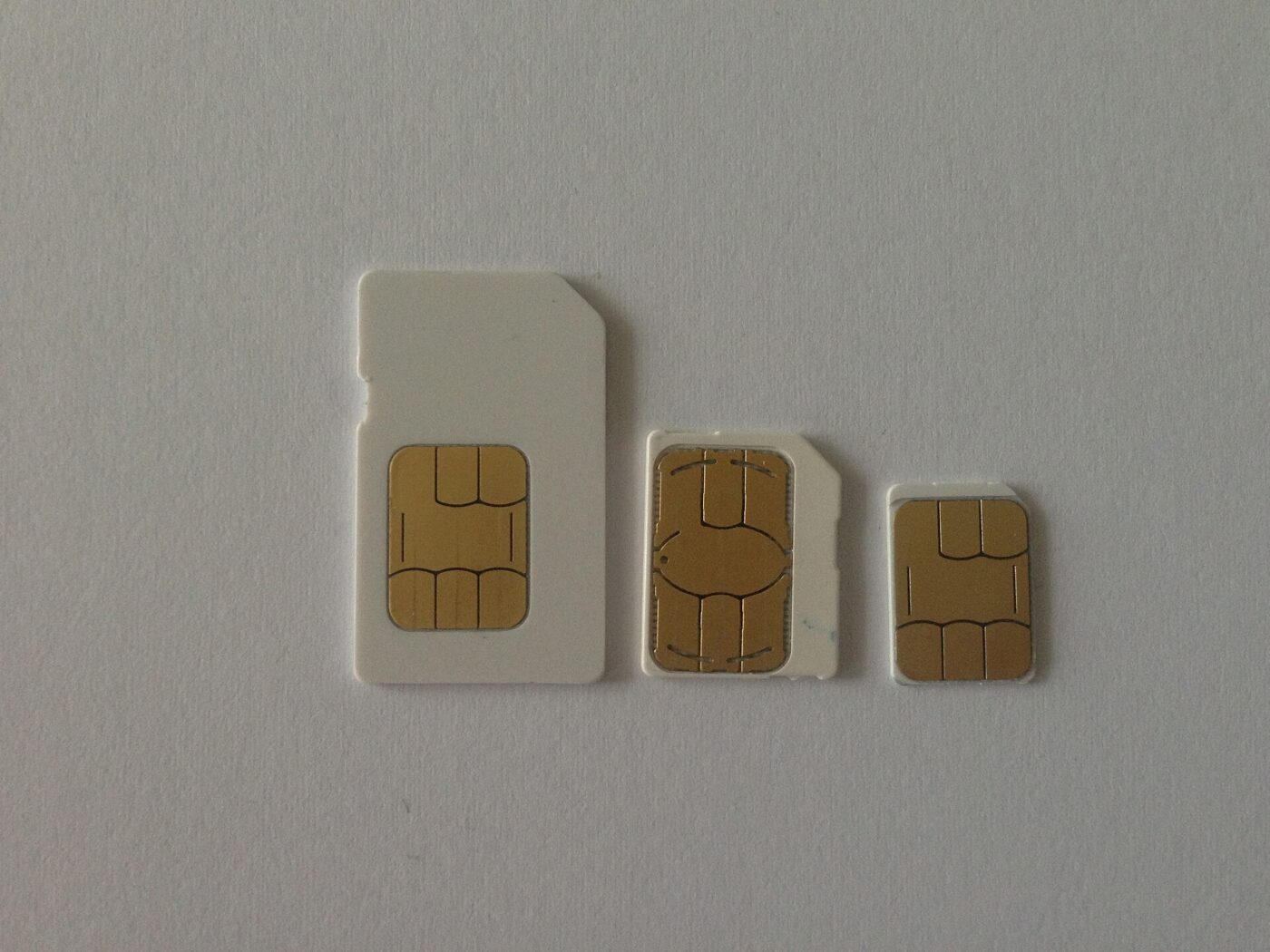
An eSIM is the same thing a SIM card always was, minus the card: a small piece of identity that tells a network which account a device belongs to, written into the phone instead of slotted into it. Apple started the shift in the United States with iPhone 14 in September 2022, whose announcement said the phones remove the SIM tray for US models. Four years on, the design has stopped being an American quirk.
When Apple announced the iPhone 18 Pro on September 9, 2026, it said eSIM-only models would be sold in Bahrain, Canada, Guam, Japan, Kuwait, Mexico, Oman, Qatar, Saudi Arabia, the UAE, the US and the US Virgin Islands. The same day it announced iPhone Duo with an eSIM-only design worldwide. Android is moving in the same direction on the software side: Samsung’s Galaxy S26 FE announcement in August 2026 describes transferring eSIM data to a new phone by scanning a QR code. Here is what the change does and does not affect.
Trend Signal
74/100 Strong momentum
- Emerging
- Rising
- Mainstream
- Peaking
- Cooling
The SIM tray is disappearing market by market, starting with the US
Apple removed the SIM tray from US iPhone models in September 2022, sold eSIM-only iPhone 17 and iPhone 18 Pro models in 12 markets, and made iPhone Duo eSIM-only worldwide in September 2026.
Our editorial reading of the cited data, not a forecast. How it is scored
By the numbers
- 500+Carriers Apple said support eSIM globally, named in its September 2025 iPhone 17 releaseApple
- 12Markets Apple listed for eSIM-only iPhone 18 Pro, September 2026, our count of the listApple
- 45 hoursVideo playback Apple quotes for the eSIM-only iPhone 18 Pro Max, September 2026Apple
- Sept 2022When Apple removed the SIM tray from US iPhone models with iPhone 14Apple
Where the SIM tray has already gone
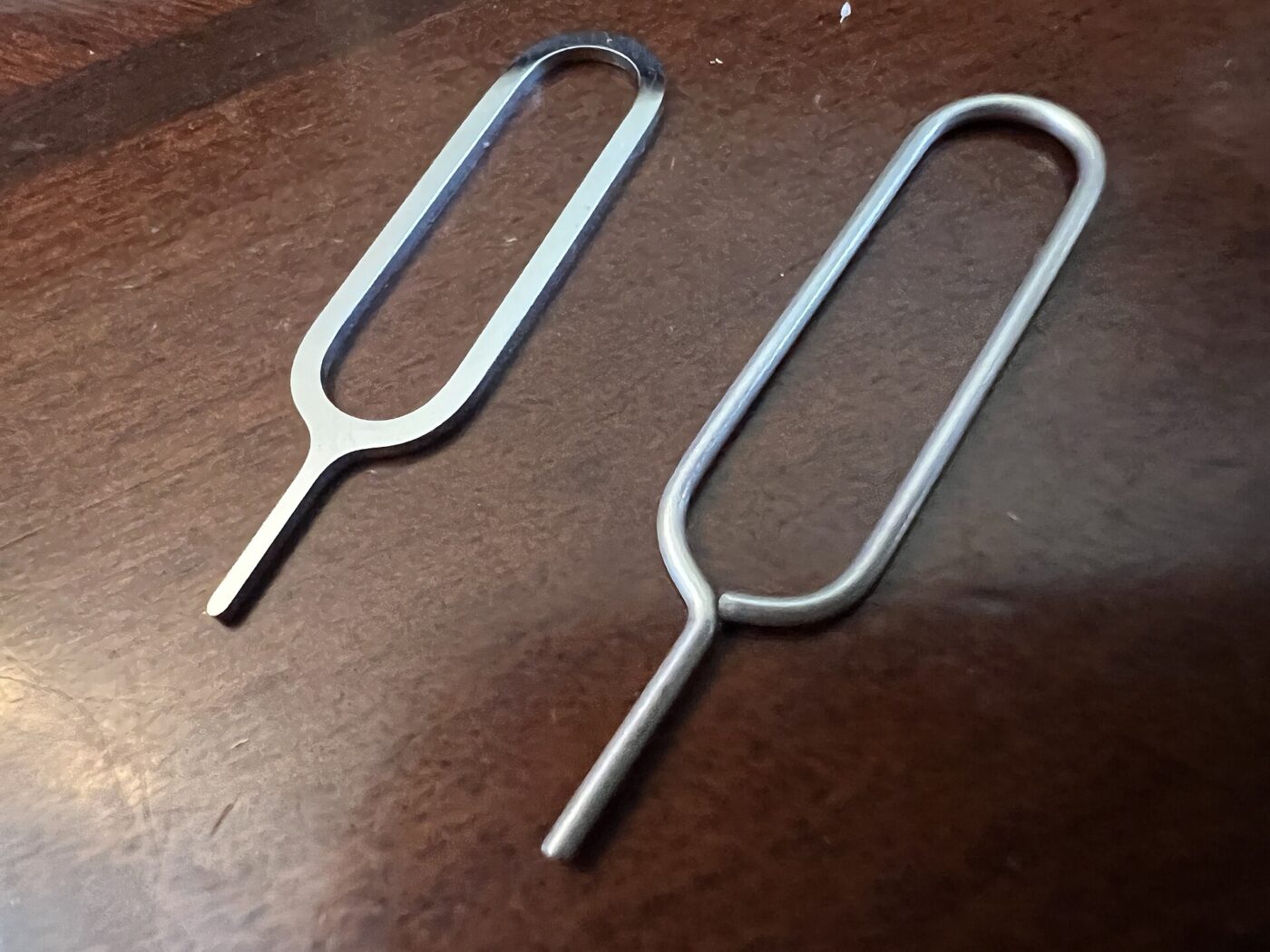
The US went first and went early. Apple’s September 2022 announcement of iPhone 14 and iPhone 14 Plus stated plainly that the phones remove the SIM tray for US models, and described eSIM as letting users connect or transfer existing plans digitally and hold multiple cellular plans on a single device. Every US iPhone since has followed that design.
The map has widened since. With iPhone 17 in September 2025 and again with iPhone 18 Pro in September 2026, Apple listed eSIM-only models for Bahrain, Canada, Guam, Japan, Kuwait, Mexico, Oman, Qatar, Saudi Arabia, the UAE, the US and the US Virgin Islands, twelve places by our count of that list. Then, on September 9, 2026, the company announced iPhone Duo with an eSIM-only design worldwide, its first phone sold without a tray anywhere.
Android has not gone tray-free at the same pace, but the plumbing is there. Samsung’s Galaxy S26 FE announcement on August 27, 2026 describes an upgraded Smart Switch that moves passwords, passkeys, call history, accessibility settings and eSIM data to a new phone by scanning a QR code, with a footnote that the availability of eSIM transfer varies by carrier.
| Device | Where the eSIM-only version is sold | Announced |
|---|---|---|
| iPhone 14 and later, US models | United States | September 2022 |
| iPhone 17 | 12 markets, including the US, Canada, Japan and Mexico | September 2025 |
| iPhone 18 Pro and iPhone 18 Pro Max | The same 12 markets | September 2026 |
| iPhone Duo | Worldwide | September 2026 |
US buyers have had no choice for four years. The rest of the world is now being offered the same design.
What the phone gains from an empty slot
The engineering argument is space. Announcing iPhone Duo, Apple said the phone features an eSIM-only design worldwide that saves internal space to maximize battery capacity. That is the clearest statement the company has made about why the tray is going, and it matters most in the thinnest and most tightly packed designs.
Apple’s own battery figures show the split. For iPhone 18 Pro it quotes up to 36 hours of video playback for eSIM-only models, and up to 45 hours for iPhone 18 Pro Max. Quoting the eSIM-only configuration separately is a signal in itself: the version without the tray is the one with the headline number.
What you have to check before you buy

Carrier support is the first question, and the answer is broadly yes at the big three. Apple said in September 2025 that over 500 carriers support eSIM globally, naming AT&T, T-Mobile and Verizon. The gaps tend to be at the edges: smaller resellers, some prepaid brands and some carriers abroad may still hand out a plastic card and nothing else.
The second question is what happens on activation day. With a physical SIM, moving to a new phone is a thirty-second job with a pin. With eSIM, it is a transfer that the carrier has to approve, which is usually quick and occasionally is not. Samsung’s Galaxy S26 FE footnotes state that the availability of eSIM transfer varies by carrier, and point to a carrier list, which is the right thing to check before a phone arrives rather than after.
- Confirm your carrier or reseller issues eSIM profiles, not only physical cards, before buying an eSIM-only phone.
- Check whether your carrier supports device-to-device eSIM transfer, since that is what replaces swapping a card.
- If you rely on local SIMs abroad, check eSIM availability in the countries you visit, or plan on a travel data plan instead.
Nothing about eSIM is hard while your carrier supports it, and nothing about it is convenient when it does not.
Moving a line, and the fraud rules behind it
Because an eSIM moves through software, the act of moving a phone number has become an account transaction rather than a physical one. Criminals worked this out early. In its November 2023 Report and Order, FCC 23-95 in WC Docket No. 21-341, the Commission described SIM swapping as a bad actor convincing a victim’s wireless provider to transfer the victim’s mobile service and number from the victim’s cell phone to a cell phone in the bad actor’s possession, and port-out fraud as the same theft run through a second carrier.
The Commission adopted rules on November 15, 2023 in response. They revise the Commission’s customer proprietary network information and number portability rules to require wireless providers to adopt secure methods of authenticating a customer before redirecting a phone number to a new device or provider, and to notify customers immediately whenever a SIM change or port-out request is made on their account. The same order also takes up account locks for SIM changes and for port-outs.
Who should buy an eSIM-only phone now
For most US buyers the question is already settled, because every iPhone sold here since September 2022 has been eSIM-only and the major carriers support it. The group with a genuine decision to make is buyers outside the US choosing between a tray version and an eSIM-only one, and anyone whose service comes from a small reseller or a regional prepaid brand.
The people who benefit most are households running two lines on one phone, anyone who wants the thinnest possible hardware, and buyers who value the extra battery capacity Apple says the design frees up. If you are in that group, the empty slot is not a compromise, it is the point.
What to watch next
- Whether Apple extends eSIM-only models beyond the 12 markets it listed for iPhone 18 Pro, which its launch releases state each September
- Whether Android flagships start shipping without trays in the US, following the eSIM transfer features Samsung has already built into Smart Switch
- Whether prepaid brands and smaller resellers add eSIM support, since that is where the remaining gaps sit
Where to start
Paid links: we earn a commission if you buy through the buttons below, at no extra cost to you. As an Amazon Associate I earn from qualifying purchases.
What to line up before moving to an eSIM-only phone
| Product type | Good fit for | Where to look |
|---|---|---|
| Unlocked eSIM-capable smartphone | Fits a straightforward carrier switch | See listings on AmazonOpens Amazon search results, not one listing: check the model on the product page. |
| Cellular smartwatch with eSIM | Fits a second connected device | See listings on AmazonOpens Amazon search results, not one listing: check the model on the product page. |
| Mobile hotspot | Fits travel and backup connectivity | See listings on AmazonOpens Amazon search results, not one listing: check the model on the product page. |
Product types that fit the trend described above, not tested models. Check the exact listing before you buy. How we pick them.
Unlocked eSIM-capable smartphone
Where to look: Amazon
The main decision. Apple said in September 2025 that over 500 carriers support eSIM globally, including the three largest US networks, so the check that matters is whether your specific plan or reseller issues profiles.
- Activates without waiting for a card
- Holds more than one plan
- Transfer depends on carrier support
- Harder to move between handsets
Cellular smartwatch with eSIM
Where to look: Amazon
A watch line is the everyday example of how the technology behaves: a plan added in software and tied to the carrier account rather than to a card you can move by hand.
- Shares a number with the phone
- No card to install
- Usually needs a paid line
- Carrier support varies by model
Mobile hotspot
Where to look: Amazon
Useful for the one situation eSIM complicates, which is buying local service abroad. Check whether the hotspot accepts a physical card as well, because that flexibility is the reason to own one.
- Keeps a spare data path
- Some models take either SIM type
- Another device to charge
- Plan costs extra
More: Tech and Gadgets trends and how the Trend Signal is scored.
Sources
- Apple debuts iPhone 18 Pro and iPhone 18 Pro Max — Apple
- Apple unveils iPhone Duo — Apple
- Apple debuts iPhone 17 — Apple
- Apple introduces iPhone 14 and iPhone 14 Plus — Apple
- Samsung Galaxy S26 FE announcement — Samsung Newsroom
- Protecting Consumers from SIM Swap and Port-Out Fraud, FCC 23-95 — Federal Communications Commission
Questions readers ask
What is an eSIM?
It is a SIM built into the device rather than inserted as a card. Apple describes it as letting users connect or transfer existing plans digitally and hold multiple cellular plans on a single device. The account information is downloaded as a profile instead of arriving in the mail.
Which phones are eSIM-only?
All US iPhone models since iPhone 14, announced in September 2022, have no SIM tray. Apple also sold eSIM-only iPhone 17 and iPhone 18 Pro models in 12 markets including Canada, Japan and Mexico, and announced iPhone Duo on September 9, 2026 with an eSIM-only design worldwide.
Do US carriers support eSIM?
Apple said in September 2025 that over 500 carriers support eSIM globally, naming AT&T, T-Mobile and Verizon. Support among smaller resellers and prepaid brands is less uniform, so it is worth confirming with your own provider before buying.
How do I move my number to a new phone?
The line transfers as a profile rather than as a card. Samsung’s Smart Switch, described in its August 2026 Galaxy S26 FE announcement, moves eSIM data by scanning a QR code, and the company notes that eSIM transfer availability varies by carrier. Where transfer is not supported, the carrier reissues the profile.
Is eSIM safer than a physical SIM?
It removes the risk of a card being taken from a phone, but the account itself is the target. The FCC adopted rules on November 15, 2023 requiring carriers to authenticate customers before redirecting a number, and to notify them immediately when a SIM change or port-out is requested.