For a generation, audio equipment was the shelf where waiting paid. The Bureau of Labor Statistics prices all of it as one item, whose published content note reads, in full, all types of home, portable, and automobile audio equipment and accessories. Headphones are not named there; BLS instead excludes two-eared headphones used primarily for listening to music from its phones item and points them at this one. That index averaged 80.2 in 2000 and 24.854 in 2024 on its 1982–84 base, a fall of 69.0 percent, our calculation from CPI data pulled on September 24, 2026, across 24 years in which the all items index rose 82.2 percent.
Then the line turned. The 2025 annual average came in at 26.652, up 7.2 percent on 2024 and the biggest one-year rise in annual averages that start in 1978. What followed was a stall, not a return to the slide: August 2026 stood at 27.381, 2.0 percent below August 2025 and one thousandth of an index point below December 2025. Anyone waiting for audio gear to get cheaper is waiting for something that stopped happening.
Trend Signal
40/100 Steady momentum
- Emerging
- Rising
- Mainstream
- Peaking
- Cooling
A shelf that stopped getting cheaper and then stopped moving at all
The BLS audio equipment index averaged 26.652 in 2025 against 24.854 in 2024, a 7.2 percent rise and the biggest since the annual averages start in 1978, our calculation from CPI data pulled September 24, 2026. August 2026 stood at 27.381.
Our editorial reading of the cited data, not a forecast. How it is scored
By the numbers
- 69.0%Fall in the BLS audio equipment index between the 2000 and 2024 annual averages, our mathU.S. Bureau of Labor Statistics
- +7.2%Rise in the same index from the 2024 annual average to 2025, the largest since 1978U.S. Bureau of Labor Statistics
- $23.2MIEEPA tariff refunds Sonos reported for the quarter ended June 27, 2026Sonos
What the audio line in the CPI actually covers
A price trail is only as good as its definition. The audio equipment index is built from one entry-level item, RA051, titled Audio media players, recorders, systems, and other equipment. Because its content note is that single line, the exclusions do most of the work: BLS prices portable media players with screens larger than seven inches as video equipment and sends personal audio players that run apps and browse the internet to handheld computers. Calling it the headphone line is our shorthand, not a BLS label.
It is a small line: 0.046 percent of the CPI-U basket in the December 2025 relative importance table, against 0.107 percent for televisions. Nothing here moves the headline inflation number.
One methodological detail matters more than it sounds. BLS publishes which entry-level items get hedonic quality adjustment, which removes the value of a quality change when a replacement item enters the sample. Televisions, other video equipment and photographic equipment are on that list; the audio item is listed as none. We read that as a comparison of two rows in a BLS table: the television index carries a quality correction the audio index never gets. BLS draws no conclusion from it.
The audio index is small, tightly defined and, unlike the television index, not hedonically adjusted.
Twenty-four years of falling prices
The decline was strikingly even. On annual averages the index fell 24.4 percent between 2000 and 2005, 21.9 percent to 2010, 24.0 percent to 2015 and 25.5 percent to 2020: four straight five-year stretches of roughly a quarter off, all our calculations. The steepest year was 2018, down 13.9 percent on 2017.
The slowdown arrived before the reversal did. From the 2020 annual average to 2024 the index fell 7.3 percent across four years, a pace the category used to manage in about 18 months. One gap in the table is not ours: BLS collected no CPI data during the 2025 lapse in appropriations, so there is no October 2025 reading and the 2025 annual average covers 11 months.
| Period | Audio equipment index |
|---|---|
| 2000 annual average | 80.2 |
| 2005 annual average | 60.6 |
| 2010 annual average | 47.342 |
| 2015 annual average | 36.003 |
| 2020 annual average | 26.810 |
| 2024 annual average | 24.854 |
| 2025 annual average | 26.652 |
| August 2026 | 27.381 |
The pace of decline had already collapsed for four years before the line turned in 2025.
The year the line turned
Inside 2025 the move was concentrated. The index sat at 24.204 in March 2025 and 26.330 in April, an 8.8 percent jump in one month, and reached 28.153 in July, 16.3 percent above March. We re-pulled the file to test that step: the levels are as published, the only footnote on the series marks the missing October 2025 reading, and since December 1977 only May 2000 moved further in a month.
The index does not record causes, so read 2025 against the trade record companies filed. Sonos, in its quarterly report for the three months ended June 27, 2026, states that on February 20, 2026 the US Supreme Court ruled certain tariffs imposed under the International Emergency Economic Powers Act invalid, that it had paid about $41 million in IEEPA-related tariffs, and that it received $23.2 million of refunds in that quarter as a reduction to cost of revenue. The Supreme Court docket in Learning Resources, Inc. v. Trump, No. 24-1287, records the February 20, 2026 disposition: the judgment below vacated, the case remanded with instructions to dismiss for lack of jurisdiction, and the consolidated No. 25-250 affirmed.
Koss, whose contract manufacturers are primarily in China and Taiwan, covered the same period in its annual report filed August 28, 2026. It recorded $753,000 of IEEPA tariff refunds as an offset to cost of sales for the year ended June 30, 2026, without which its gross margin would have been 36.1 percent rather than the reported 41.9 percent.
Koss’s filing also notes that although the IEEPA tariffs were invalidated, the US government has imposed, and may continue to impose, tariffs under other authorities, naming Sections 122, 301 and 232, and that the temporary 10 percent Section 122 surcharge on Chinese-sourced product expired on July 24, 2026 as the US Trade Representative implemented replacement Section 301 tariffs tied to forced-labor findings, generally 10 or 12.5 percent. We read the 2025 step up as consistent with a duty shock in landed costs, and the 2026 flatness as what follows when part of that shock is refunded and part replaced.
Refunds are being booked, but on Koss’s own account the duty burden did not go to zero.
Flat, not falling, through August 2026
Across eight months of 2026 the index has gone almost nowhere: 27.836 in January, a peak of 27.866 in April, 27.381 in August, a spread of 1.8 percent. BLS reported on September 11, 2026 that the all items index rose 3.4 percent over the 12 months to August 2026 and commodities less food and energy commodities rose 0.7 percent. Audio equipment is easing against a basket that is rising, a far weaker bargain than it offered for 20 years.
The company numbers say demand is not collapsing. Koss, in that August 28, 2026 filing, reported fiscal 2026 net sales of $13,020,773 against $12,624,170, up 3.1 percent, with direct-to-consumer sales up 20.6 percent. Sonos reported revenue of $375.3 million for the quarter ended June 27, 2026 against $344.8 million a year earlier, up 8.8 percent.
What a buyer does with a flat price line

When an index sheds a quarter of its value every five years, waiting is a strategy. When it moves 1.8 percent across eight months, it is not. Replace what fails rather than what the calendar says; a working set is not worth swapping to catch a price drop that is not coming.
The shelf is wider than the index suggests. Koss’s annual report says it sells lines with suggested retail prices from less than $10 up to $1,000, and finds the low-priced end of the market the most competitive. On its own store on September 24, 2026 the company listed the Porta Pro on-ear model at $49.99. The same filing says Koss offers a lifetime warranty to consumers in the United States and certain other countries, worth reading before assuming two similar products are the same purchase.
A wired set has no battery to age out, so cable and pad wear set its service life. A wireless set is a battery product first.
- Check whether ear pads and cables are sold separately; those parts fail first on a wired set.
- On anything wireless, treat the battery as the service life and read the stated hours before buying.
What to watch next
- Whether the index breaks back below its December 2025 level of 27.382 in a coming CPI release
- Whether the rest of the IEEPA refunds land, against the $41 million paid and $23.2 million received Sonos reported as of June 27, 2026
Where to start
Paid links: we earn a commission if you buy through the buttons below, at no extra cost to you. As an Amazon Associate I earn from qualifying purchases.
Audio gear compared on what actually differs
| Product type | Good fit for | Where to look |
|---|---|---|
| Wired on-ear headphones | Fits a tight budget | See listings on AmazonOpens Amazon search results, not one listing: check the model on the product page. |
| Portable Bluetooth speaker | Fits shared listening | See listings on AmazonOpens Amazon search results, not one listing: check the model on the product page. |
| Wireless over-ear headphones | Fits commuting and travel | See listings on AmazonOpens Amazon search results, not one listing: check the model on the product page. |
Product types that fit the trend described above, not tested models. Check the exact listing before you buy. How we pick them.
Wired on-ear headphones
Where to look: Amazon
The cheap end of the shelf is the part Koss calls the most competitive, with its own list prices starting below $10. Buy on fit and on whether the wear parts can be replaced.
- No battery to age out
- Pads and cords are often replaceable
- Needs a 3.5mm jack or an adapter
- The cable is the usual failure point
Portable Bluetooth speaker
Where to look: Amazon
BLS files the portable speaker and the stereo system in the same line. Read the stated runtime and assume the battery decides how long it lasts.
- One unit serves a room
- Runtime is stated on the listing
- The battery sets the service life
- Sound claims are hard to compare
Wireless over-ear headphones
Where to look: Amazon
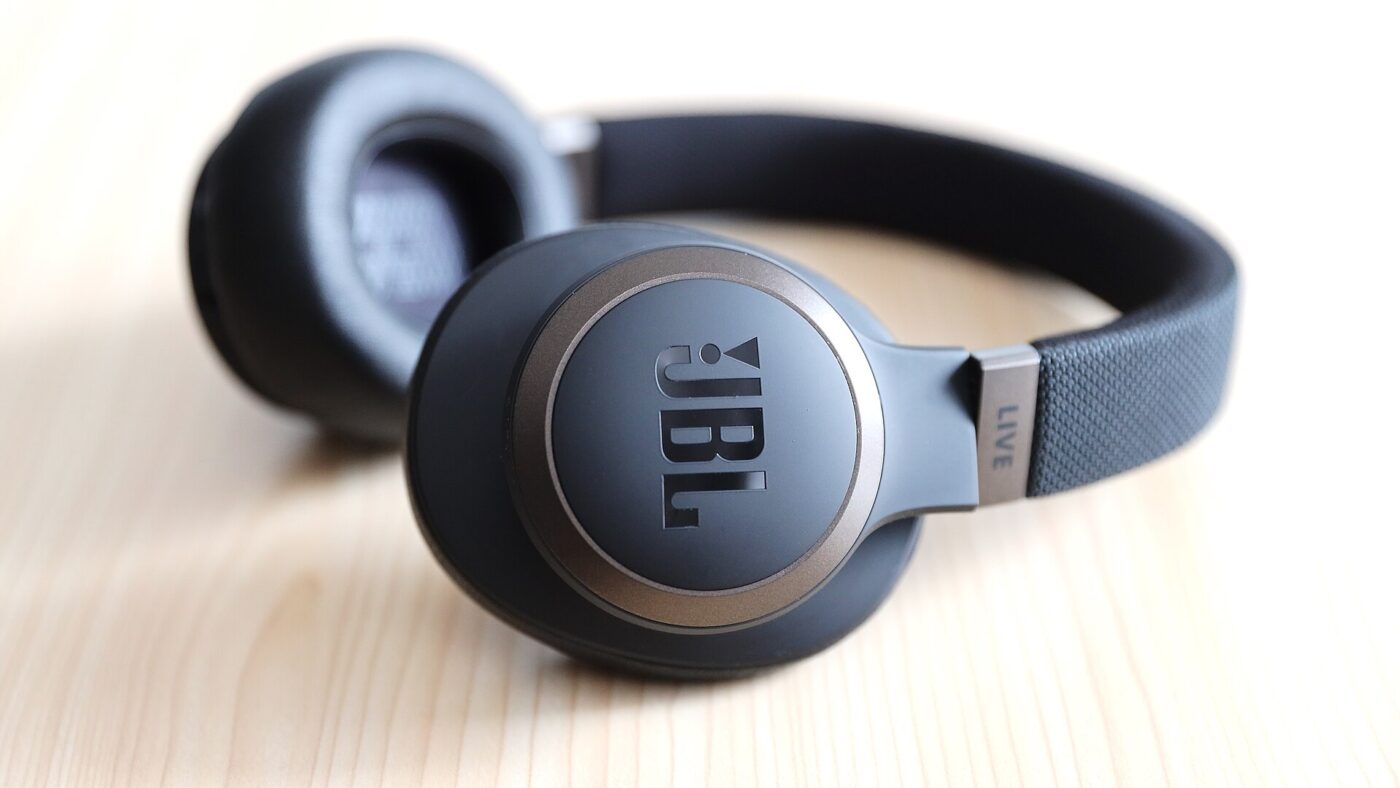
With the index flat, postponing buys little. Check whether the pads can be replaced and whether it still works with a cord.
- Sold on noise control rather than sound
- Some include a cable for wired use
- The most expensive way to buy headphones
- Pads and batteries both age
More: Tech and Gadgets trends and how the Trend Signal is scored.
Sources
- CPI data file for recreation items, series CUUR0000SERA05 — U.S. Bureau of Labor Statistics
- Consumer Price Index Summary, August 2026 — U.S. Bureau of Labor Statistics
- Relative importance of CPI components, December 2025 — U.S. Bureau of Labor Statistics
- Content of CPI entry level items — U.S. Bureau of Labor Statistics
- Quality adjustment in the CPI — U.S. Bureau of Labor Statistics
- 2025 federal government shutdown impact on the CPI — U.S. Bureau of Labor Statistics
- Form 10-K for fiscal 2026 — Koss Corporation
- Form 10-Q for the quarter ended June 27, 2026 — Sonos, Inc.
- Learning Resources, Inc. v. Trump, No. 24-1287, docket — Supreme Court of the United States
- Porta Pro product page — Koss Corporation
Questions readers ask
Are headphones and speakers getting more expensive?
Not in 2026. The BLS audio equipment index stood at 27.381 in August 2026, 2.0 percent below August 2025 and level with December 2025, our calculation from CPI data pulled September 24, 2026. The increase happened in 2025, when the annual average rose 7.2 percent on 2024.
Is the audio index the same thing as a price tag?
No. It tracks the prices BLS collects each month for the items in its sample, replacing a model when it leaves the shelf, and it is published on a 1982–84 base rather than in dollars. It says the shelf fell 69.0 percent between the 2000 and 2024 annual averages, our calculation.
Why is there no October 2025 figure?
BLS did not collect CPI data from October 1, 2025 through November 12, 2025 during the lapse in appropriations, and says the missing data affected the October and November 2025 indexes. The audio series has no October 2025 observation, so its 2025 annual average covers 11 months.
Are tariffs still adding to the price of imported audio gear?
Some are. Sonos states that the Supreme Court ruled on February 20, 2026 that certain tariffs imposed under the International Emergency Economic Powers Act were invalid, and that it received $23.2 million of refunds in the quarter ended June 27, 2026. Koss’s annual report filed August 28, 2026 says the government has imposed, and may continue to impose, duties under Sections 122, 301 and 232.