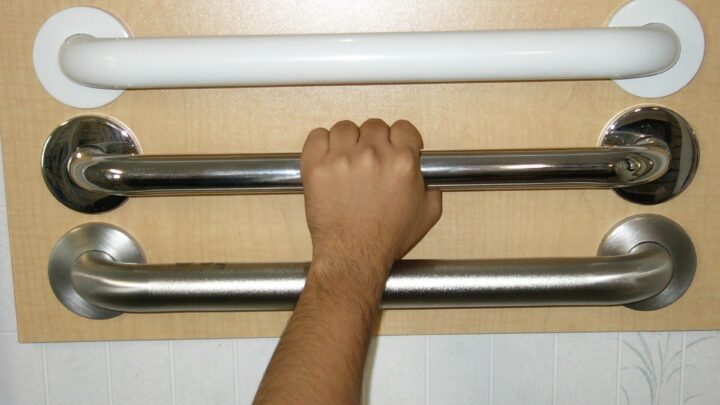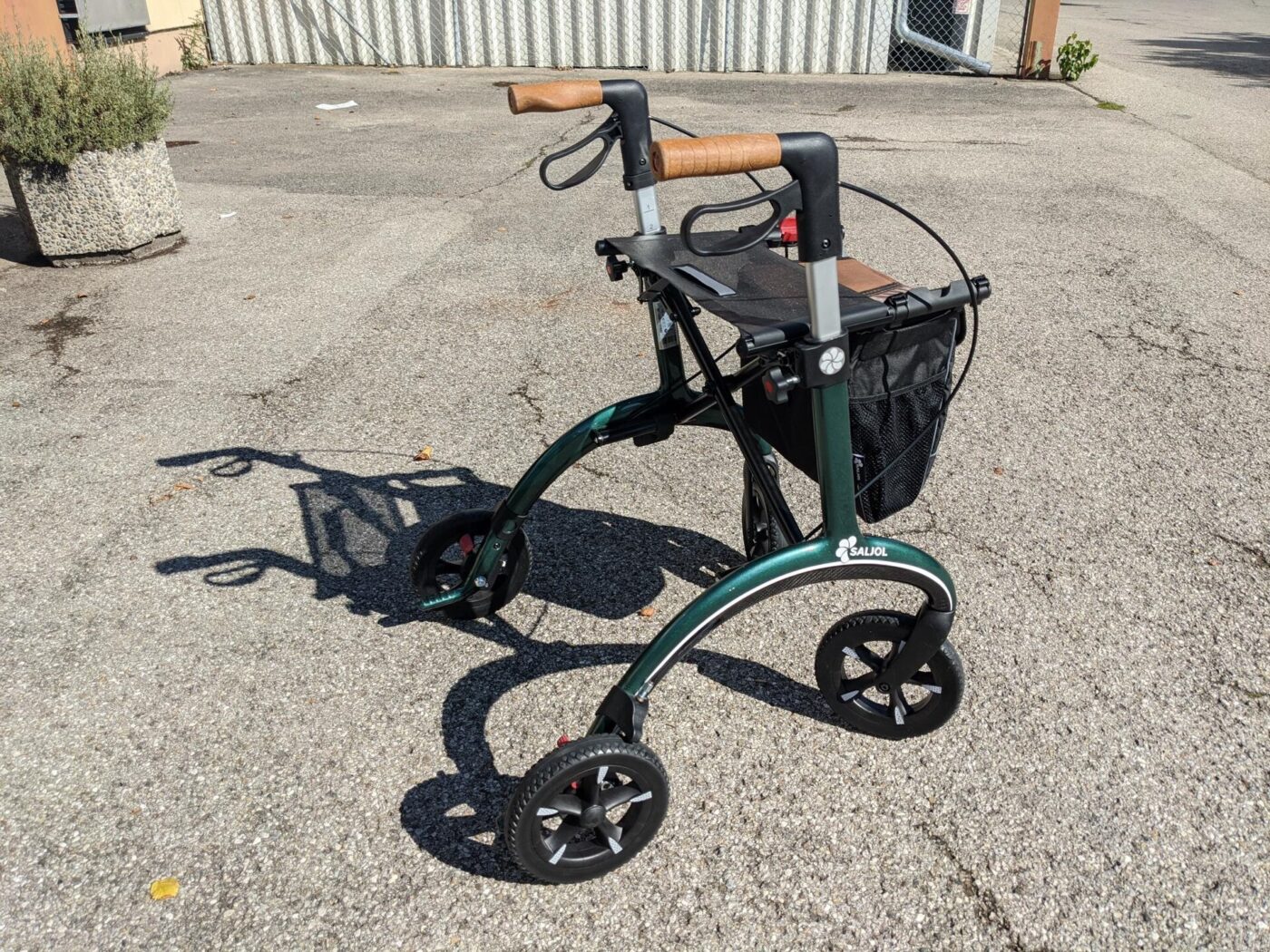
Most of the cost of aging in place is not the grab bar or the walker. It is the hours of help. CareScout’s national Cost of Care Survey, run since 2004, found that the median non-medical caregiver cost $35 an hour in 2025, which works out to $80,080 a year at 44 hours a week.
The better news in the 2025 numbers is that facility-care increases eased after a steep 2024. The less welcome news is that federal price data show care services still rising faster than prices overall. Here is the trail from 2024 to August 2026, and how equipment prices compare.
Trend Signal
60/100 Steady momentum
- Emerging
- Rising
- Mainstream
- Peaking
- Cooling
Care prices still outrun inflation, though facility increases eased in 2025
The CPI for nursing homes and adult day services rose 4.6% in the year to August 2026, against 3.4% for all items, while CareScout’s 2025 survey put non-medical in-home care at $35 an hour, up 3%.
Our editorial reading of the cited data, not a forecast. How it is scored
By the numbers
- $35/hrMedian cost of a non-medical in-home caregiver, CareScout 2025 survey, up 3%CareScout
- $6,200Median monthly cost of assisted living in the 2025 survey, up 5%CareScout
- 4.6%CPI rise for nursing homes and adult day services, August 2025 to August 2026BLS
- 2.3%CPI change for medical equipment and supplies, August 2025 to August 2026BLS
What care costs in the latest survey
CareScout surveyed about 16,000 providers in all 50 states between July and November 2025. Its national medians: $35 an hour for a non-medical caregiver, $95 a day for adult day health care, $6,200 a month for assisted living, $9,581 a month for a semi-private nursing home room and $10,798 a month for a private room.
The year before, the Genworth and CareScout survey, run from July to December 2024 with more than 15,000 responses, put a home health aide at $77,792 a year and homemaker services at $75,504, both based on 44 hours a week for 52 weeks. Assisted living was $70,800 a year and a private nursing home room $127,750.
| Care type | 2024 survey | 2025 survey | Change reported for 2025 |
|---|---|---|---|
| In-home care, 44 hours a week | $77,792 a year (home health aide) | $80,080 a year (non-medical caregiver) | +3% |
| Assisted living | $5,900 a month | $6,200 a month | +5% |
| Nursing home, semi-private room | $9,277 a month | $9,581 a month | +3% |
| Nursing home, private room | $127,750 a year | $129,575 a year | +1% |
Why the increases eased but did not stop
2024 was the steep year. Homemaker services and assisted living each rose 10%, private nursing home rooms 9% and semi-private rooms 7%, according to the Genworth and CareScout release. In the 2025 survey, facility increases were smaller: 5% for assisted living and 3% and 1% for nursing home rooms, while adult day health care fell 5%. In-home care rose 3%, the same pace the 2024 survey reported for home health aides and well below the 10% jump for homemaker services.
Labor is the reason in-home care is hard to make cheaper. The 2024 release named labor costs as the top contributor to home care increases and inflation as the top factor for facilities, and said two-thirds of home care agencies now charge the same rate for homemaker and home health aide services.
The Bureau of Labor Statistics puts the 2025 median pay for home health and personal care aides at $17.21 an hour across 4,677,100 jobs, and projects 18% employment growth over the decade that starts in 2025, with about 760,500 openings a year. With that much hiring ahead, a slower year of price increases is not the same as prices falling.
The official price index tells the same story
The Consumer Price Index tracks facility-based care through its index for nursing homes and adult day services. By our calculation from its index levels, that index rose 4.5% from August 2024 to August 2025 and 4.6% from August 2025 to August 2026, reaching 315.595. Over the same two periods, the all-items CPI rose 2.9% and 3.4%.
So facility care prices ran 1.2 to 1.6 percentage points above general inflation in each of the two years to August 2026. One caveat: BLS has no October 2025 reading for this index because of the 2025 lapse in federal appropriations, so month-by-month comparisons across that gap skip a data point.
Care prices are still rising faster than prices overall, just not by as much as the 2024 survey jumps.
Equipment is the cheaper side of the ledger
Gear has followed a different path. The CPI for medical equipment and supplies, which BLS builds from dressings and first aid kits, general-use medical equipment, and supportive and convalescent medical equipment, rose 1.5% from August 2024 to August 2025 and then fell 2.3% to August 2026, by our calculation. It hit 113.857 in February 2026, the highest reading in the series, and stood at 110.294 in August.
The comparison is not about substitution: a shower chair does not replace an aide. It is about the shape of the bill. Equipment is mostly a one-time purchase, while care is billed by the hour or the month, and at the 2025 median a year of 44-hour weeks of in-home care comes to $80,080.
What this means for planning care at home
For families pricing care, the hours are the number to watch. At $35 an hour, 20 hours a week of help comes to about $36,400 a year by our arithmetic, and 44 hours a week is $80,080. These are national medians, and local rates can differ widely, so get quotes from agencies near the person who needs care before comparing options.
Gear is where prices have not been climbing. Items that help a caregiver work safely, such as a gait belt for transfers, a shower chair for seated bathing and motion-sensor lights for night trips to the bathroom, are one-time purchases. None of them is a substitute for care, and anything tied to a medical condition belongs in a conversation with a clinician.
What to watch next
- CareScout’s next Cost of Care Survey, for whether the smaller 2025 facility increases hold.
- The monthly CPI release for nursing homes and adult day services, which rose 4.6% in the year to August 2026.
- BLS pay data for home health and personal care aides, the labor cost behind in-home care rates.
Where to start
Paid links: we earn a commission if you buy through the buttons below, at no extra cost to you. As an Amazon Associate I earn from qualifying purchases.
Caregiver gear for helping someone at home
| Product type | Good fit for | Where to look |
|---|---|---|
| Gait belt with handles | Fits helping someone stand or transfer | See listings on AmazonOpens Amazon search results, not one listing: check the model on the product page. |
| Shower chair with back and arms | Fits seated bathing | See listings on AmazonOpens Amazon search results, not one listing: check the model on the product page. |
| Motion-sensor night lights | Fits safer night-time trips | See listings on AmazonOpens Amazon search results, not one listing: check the model on the product page. |
Product types that fit the trend described above, not tested models. Check the exact listing before you buy. How we pick them.
Gait belt with handles
Where to look: Amazon
A padded belt with handles that a caregiver holds while helping someone stand or walk. Ask a physical or occupational therapist to show the technique before relying on it.
- Gives a caregiver a secure grip
- Inexpensive and reusable
- Takes practice to use correctly
- Not a substitute for trained help
Shower chair with back and arms
Where to look: Amazon
Pairs with a hand-held shower head. Check the rated weight, the leg adjustment and the feet, and measure the tub or shower floor before ordering.
- Lets the user sit while washing
- No installation
- Takes floor space in small tubs
- Works best with a hand-held shower
Motion-sensor night lights
Where to look: Amazon
Motion-sensor lights along the route from bed to bathroom are one of the simplest changes at home. Check how bright each one is and how long it stays on.
- Lights the path automatically
- Cheap to add in several rooms
- Plug-in models need free outlets
- Battery models need recharging
More: Aging and Accessibility trends and how the Trend Signal is scored.
Sources
- Cost of Care Survey 2025 — CareScout
- Genworth and CareScout Release Cost of Care Survey Results for 2024 — Genworth Financial
- CPI: Nursing homes and adult day services, U.S. city average — Bureau of Labor Statistics
- CPI: Medical equipment and supplies, U.S. city average — Bureau of Labor Statistics
- CPI: All items, U.S. city average — Bureau of Labor Statistics
- Home Health and Personal Care Aides, Occupational Outlook Handbook — Bureau of Labor Statistics
- CPI Entry Level Item Descriptions — Bureau of Labor Statistics
Questions readers ask
How much does in-home care cost per hour in 2026?
The most recent national figure is from CareScout’s 2025 survey, which put the median non-medical caregiver at $35 an hour, up 3%. At 44 hours a week for 52 weeks that is $80,080 a year.
How much does assisted living cost per month?
CareScout’s 2025 survey put the national median at $6,200 a month, up 5% from $5,900 a month ($70,800 a year) in the 2024 survey.
Are care costs still rising faster than inflation?
Yes, based on BLS data. The CPI for nursing homes and adult day services rose 4.6% from August 2025 to August 2026, while the all-items CPI rose 3.4%.
Are medical equipment prices going up?
Not in the year to August 2026. The CPI for medical equipment and supplies fell 2.3% from August 2025 to August 2026, after a 1.5% rise the year before.