Multicolor printing used to be the premium corner of home 3D printing, an add-on for enthusiasts willing to tolerate slow prints and a bin of wasted plastic. By September 2026 it is the headline feature across the entry-level market, with launch prices running from a $569 bundle to $2,399 machines that swap whole hotends in the middle of a print.
The hardware has split into three designs with different prices and different amounts of waste. Below: what the shipment data show, how the approaches differ, and who gets real value from the upgrade now.
Trend Signal
81/100 Strong momentum
- Emerging
- Rising
- Mainstream
- Peaking
- Cooling
Color is now the main upgrade in entry-level printers
CONTEXT counted entry-level 3D printer shipments up 39% year over year in Q1 2026, with revenue up 54%, and has named advanced multicolor systems a strong catalyst for the segment.
Our editorial reading of the cited data, not a forecast. How it is scored
By the numbers
- +39%Entry-level (under $2,500) 3D printer shipments worldwide, Q1 2026 vs Q1 2025CONTEXT
- +26%Entry-level 3D printer shipments worldwide, full-year 2025 vs 2024CONTEXT
- $20.6MRaised on Kickstarter by the Snapmaker U1 toolchanger from 20,680 backersSnapmaker
- $569US launch price of the Bambu Lab A2L bundled with the AMS Lite changer, June 20263DPrint.com
Why multicolor became the selling point
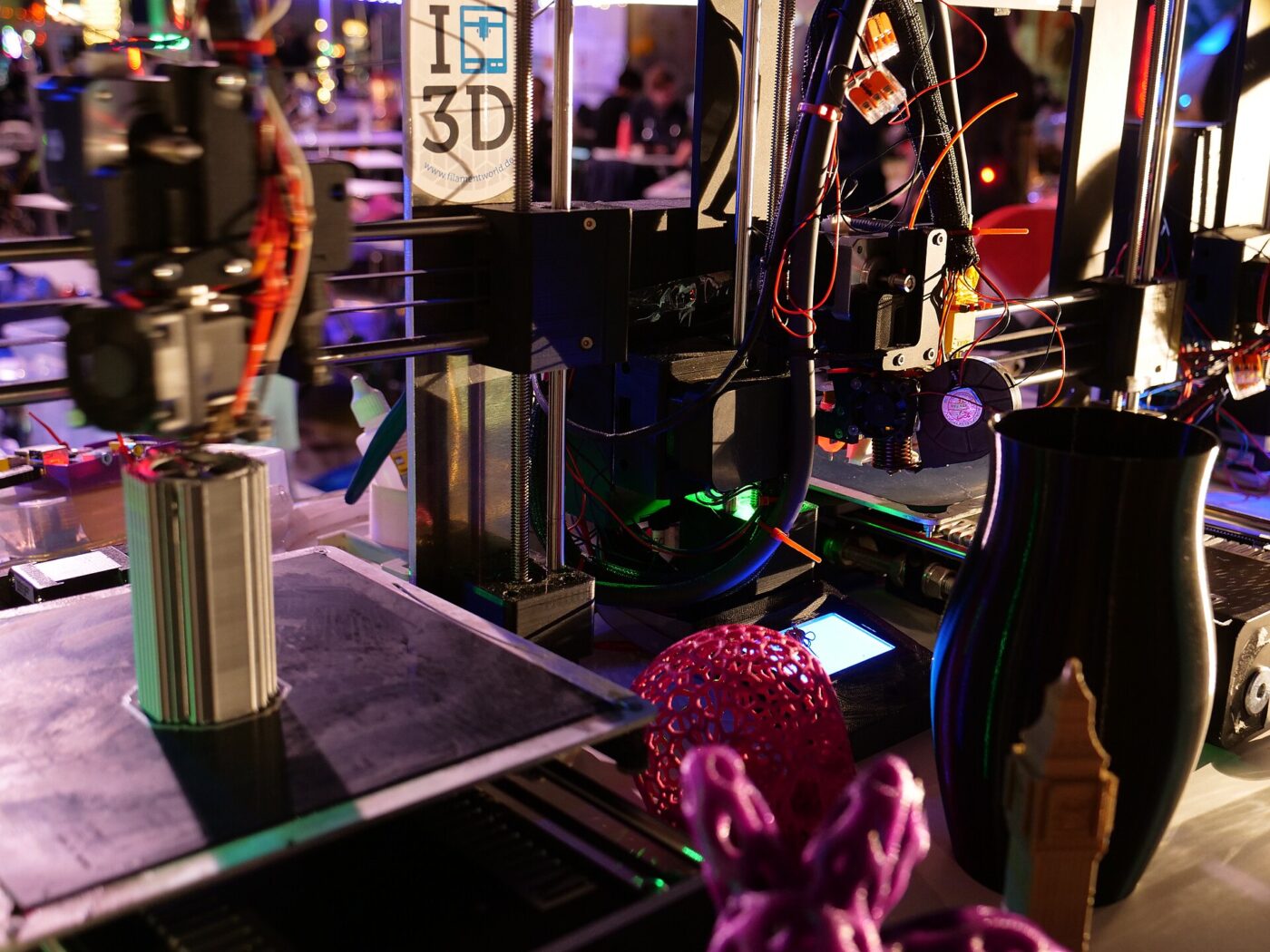
The entry-level printer market, which CONTEXT defines as machines under $2,500, climbed out of its slump in 2025. The firm counted shipments up 47% year over year in the fourth quarter and 26% for the full year, then up 39% in the first quarter of 2026. In its April 2026 report CONTEXT said advanced multicolor solutions “remain a strong catalyst,” citing Snapmaker’s record crowdfunding campaign as evidence, and said entry-level was on track for the highest growth rate of any segment in 2026.
Revenue is growing faster than units: up 53% against 47% in Q4 2025, and 54% against 39% in Q1 2026. We read that as buyers moving up to pricier bundles, and color hardware is the most visible upgrade on the menu. By our arithmetic from launch prices, adding a changer cost $80 on Bambu Lab’s A2L and $250 on its P2S.
The appeal is simple. A color print comes off the bed finished, with no painting, which suits figurines, signs, keychains and gifts. It also suits print farms that sell those items; CONTEXT said in July 2026 that demand increasingly comes from farms around the world producing goods locally.
Buyers are spending more per printer, and multicolor capability is the main thing they are paying extra for.
Three ways a printer switches colors

Filament changers are the cheapest route. A box holding several spools feeds a single nozzle; at each color change the printer pulls the old filament back, loads the new one and purges the mixed plastic, into a waste chute or a purge tower printed beside the part. Bambu Lab’s AMS Lite and AMS 2 Pro work this way, and the AMS 2 Pro adds built-in filament drying and humidity control.
Toolchangers give each color its own printhead. The Snapmaker U1 parks four independent toolheads and swaps them in about five seconds, and Snapmaker claims up to 85% less waste than shared-nozzle filament switching. Its Kickstarter raised $20.6 million from 20,680 backers, the most for any 3D printer on the platform, and the company says more than 100,000 units have shipped, with users in more than 80 countries.
Hotend swapping is Bambu Lab’s newer answer. The H2C, launched in November 2025, can use up to six swappable hotends and heats them by induction in as little as eight seconds, 3DPrint.com reported. Because each hotend can stay dedicated to one material, far less plastic is purged. Owners of the earlier H2D can convert, though VoxelMatters reported the upgrade takes skill and a few hours.
What multicolor costs in 2026
Launch prices form a wide ladder. Bambu Lab launched the A2L in June 2026 at $489, or $569 with the AMS Lite. It launched the P2S in October 2025 at $549 alone or $799 as a combo with the AMS 2 Pro. Snapmaker took U1 pre-orders at $849 in October 2025, and Bambu Lab opened US sales of the H2C in December 2025 from $2,399 as an AMS combo, rising to $3,599 with a 40-watt laser module.
Tariffs remain a wild card for US buyers. When Bambu Lab announced the P2S in October 2025 it delayed US sales and warned that final US pricing could change with tariff developments; the printer went on sale in the US in late November 2025 at the announced prices.
| Design | Example (launch) | US price | Trade-off |
|---|---|---|---|
| Filament changer, one nozzle | Bambu Lab A2L + AMS Lite (June 2026) | $569 | Purges at every color change |
| Filament changer with dryer | Bambu Lab P2S Combo (Oct. 2025) | $799 | Same purge, but spools stay dry |
| Four-head toolchanger | Snapmaker U1 (2025) | $849 | Limited to its four heads |
| Hotend swapping | Bambu Lab H2C (Nov. 2025) | $2,399 | Highest price of the four |
Who should buy now, and who should wait
Buy now if color is the point: figurines, name signs, board game pieces, cosplay details, gifts. A filament-changer bundle is the cheapest way in. Budget for waste, since purged plastic comes out of the same spools you paid for, and it grows with the number of color changes in a print.
Consider a toolchanger or hotend-swap machine if you print multicolor jobs every week or mix materials, such as a rigid body with flexible grips. The waste savings add up with volume, which is why print farms care about them. Wait if you mostly print single-color brackets, organizers and replacement parts; a base printer does that job, and on models sold both ways you can add a changer later.
Two counter-signals deserve a look. A US jury found in September 2026 that Bambu Lab infringed Stratasys patents that include purge tower technology, and Bambu Lab says it will appeal. Tariffs have already clouded US pricing for one launch. The verdict came after CONTEXT’s latest data, and tariff uncertainty did not stop entry-level shipments from rising 39% in Q1 2026.
What to watch next
- CONTEXT’s next quarterly shipment report, for whether entry-level growth stays near the 39% of Q1 2026
- Bambu Lab’s appeal of the September 2026 Stratasys verdict, which covered purge tower functionality
- Holiday bundle pricing on multicolor combos, and whether US prices keep matching launch prices
Where to start
Paid links: we earn a commission if you buy through the buttons below, at no extra cost to you. As an Amazon Associate I earn from qualifying purchases.
Multicolor printing gear by what it solves
| Product type | Good fit for | Where to look |
|---|---|---|
| Multicolor 3D printer combo with filament changer | Fits first-time color printing | See listings on AmazonOpens Amazon search results, not one listing: check the model on the product page. |
| Filament dryer box | Fits humid rooms and fussy filament | See listings on AmazonOpens Amazon search results, not one listing: check the model on the product page. |
| PLA filament multicolor multipack | Fits stocking several colors at once | See listings on AmazonOpens Amazon search results, not one listing: check the model on the product page. |
Product types that fit the trend described above, not tested models. Check the exact listing before you buy. How we pick them.
Multicolor 3D printer combo with filament changer
Where to look: Amazon
The entry point for most buyers. Compare the combo price with the printer alone, and look at how many spools the changer holds and whether it can be added later.
- Cheapest route into color
- Sold as a bundle with the printer
- Purges plastic at every swap
- Waste grows with color count
Filament dryer box
Where to look: Amazon
Useful if your changer has no drying of its own and you print materials that absorb moisture. Check whether it can feed filament while it dries.
- Keeps spools dry while printing
- Helps moisture-sensitive filament
- Another box on the bench
- Adds to setup cost
More: Hobbies and Crafts trends and how the Trend Signal is scored.
Sources
- Quarterly global 3D printer shipments, Q1 2026 — CONTEXT
- Quarterly Industrial 3D Printer Shipments Rebound Amid Continued Record-Breaking Entry-Level Growth — CONTEXT
- Snapmaker U1 Toolchanger 3D Printer — Snapmaker
- Snapmaker’s U1 Becomes Kickstarter’s Most Funded 3D Printer Project — 3DPrint.com
- Bambu Releases H2C With Vortek System Upgrade — 3DPrint.com
- Bambu Lab Launches P2S — 3DPrint.com
- Bambu Launches A2L: What the New Printer Reveals About Its Strategy — 3DPrint.com
- Bambu Lab announces H2C and new Vortek hotend change system — VoxelMatters
- Stratasys Wins $27.6M in Patent Case Against Bambu Lab — 3DPrint.com
Questions readers ask
Is a multicolor 3D printer worth it in 2026?
It is worth it if you print color items regularly. By our arithmetic from launch prices, the multicolor premium was $80 on Bambu Lab’s A2L and $250 on its P2S, and CONTEXT counted entry-level shipments up 39% in Q1 2026, with multicolor systems cited as a growth driver.
What is the difference between a filament changer and a toolchanger?
A filament changer feeds several spools through one nozzle and purges plastic at every color change. A toolchanger, such as the four-head Snapmaker U1, gives each color its own printhead and swaps heads in about five seconds, which Snapmaker says cuts waste by up to 85%.
How much filament does multicolor printing waste?
It depends on the design and on how many color changes a print needs. Single-nozzle changers purge at each swap. Snapmaker claims up to 85% less waste for its U1 toolchanger, and Bambu Lab built the H2C’s hotend swapping to reduce purging.
Will tariffs raise US prices for 3D printers?
They could. Bambu Lab warned in October 2025 that final US pricing of its P2S could change with tariff developments, then opened US sales in late November 2025 at the announced $549 and $799.