Americans are drinking less, and the change has lasted long enough to show up in brewers’ results. Gallup’s 2025 Consumption Habits survey put the share of U.S. adults who drink at 54%, the lowest in its nearly 90-year trend, and its July 2026 survey found the same 54%. In 2023 the figure was 62%.
In 2026 the evidence from consumers and companies points the same way: fewer drinkers, more moderation among those who still drink, and double-digit growth in no-alcohol beer at AB InBev and Heineken. Here is what the numbers show, and what to know before you stock a fridge with the alternatives.
Trend Signal
66/100 Steady momentum
- Emerging
- Rising
- Mainstream
- Peaking
- Cooling
No-alcohol beer is growing while total alcohol shrinks
AB InBev said its U.S. no-alcohol beer revenue grew by a percentage in the mid-thirties in the second quarter of 2026, and Gallup found 17% of U.S. adults chose a non-alcoholic beer, wine or spirit instead of alcohol in the past year.
Our editorial reading of the cited data, not a forecast. How it is scored
By the numbers
- 54%U.S. adults who drink alcohol, July 2026 survey, matching the 2025 record lowGallup
- 17%U.S. adults who had a non-alcoholic beer, wine or spirit instead of a drink, past yearGallup
- +27%AB InBev global no-alcohol beer revenue growth, second quarter of 2026AB InBev filing, SEC
- +12%Heineken low- and no-alcohol volume growth, first half of 2026Heineken
The drinking data behind the shift
Gallup’s 2025 reading was the break point. The drinking rate fell from 62% in 2023 to 58% in 2024 and 54% in 2025, and among adults aged 18 to 34 it dropped from 59% to 50% between 2023 and 2025. For the first time in Gallup’s tracking, a majority, 53%, said drinking in moderation is bad for one’s health.
The 2026 survey, conducted July 1–19 with 1,200 adults, showed the new level holding. The drinking rate stayed at 54%, 51% said one or two drinks a day is bad for one’s health, and the share who say they sometimes drink too much fell to a new low of 13%.
The global picture is similar. IWSR, which tracks beverage alcohol volumes, reported that total volumes fell 2% in 2025, the third straight annual decline. In the top 15 markets volumes fell 3%, and every major category declined except ready-to-drink (RTD) products and no-alcohol.
The U.S. drinking rate has stopped falling at 54%, but it has not bounced back.
Who is buying non-alcoholic drinks
Gallup asked about substitution directly in 2026. Seventeen percent of adults said they had consumed a non-alcoholic beer, wine or spirit instead of an alcoholic drink at some point in the past year: 20% of drinkers and 14% of non-drinkers. By our arithmetic on those figures, roughly six in ten of the people choosing these products still drink alcohol.
Among drinkers who use non-alcoholic products, 38% said they are drinking more of them than they used to, about double the 17% who said they are drinking less. That is a moderation story more than an abstinence story, and it matches IWSR research published in July 2026, which found Gen Z favors cocktails, RTDs and no-alcohol alternatives, while moderation is especially pronounced among Boomers in markets including the U.S.
The drinkers who remain are not drinking much more. Gallup’s drinkers reported an average of 3.2 drinks in the past week in 2026, similar to 2.8 in 2025 and below the 3.9 average of the five readings before that.
What the brewers are reporting
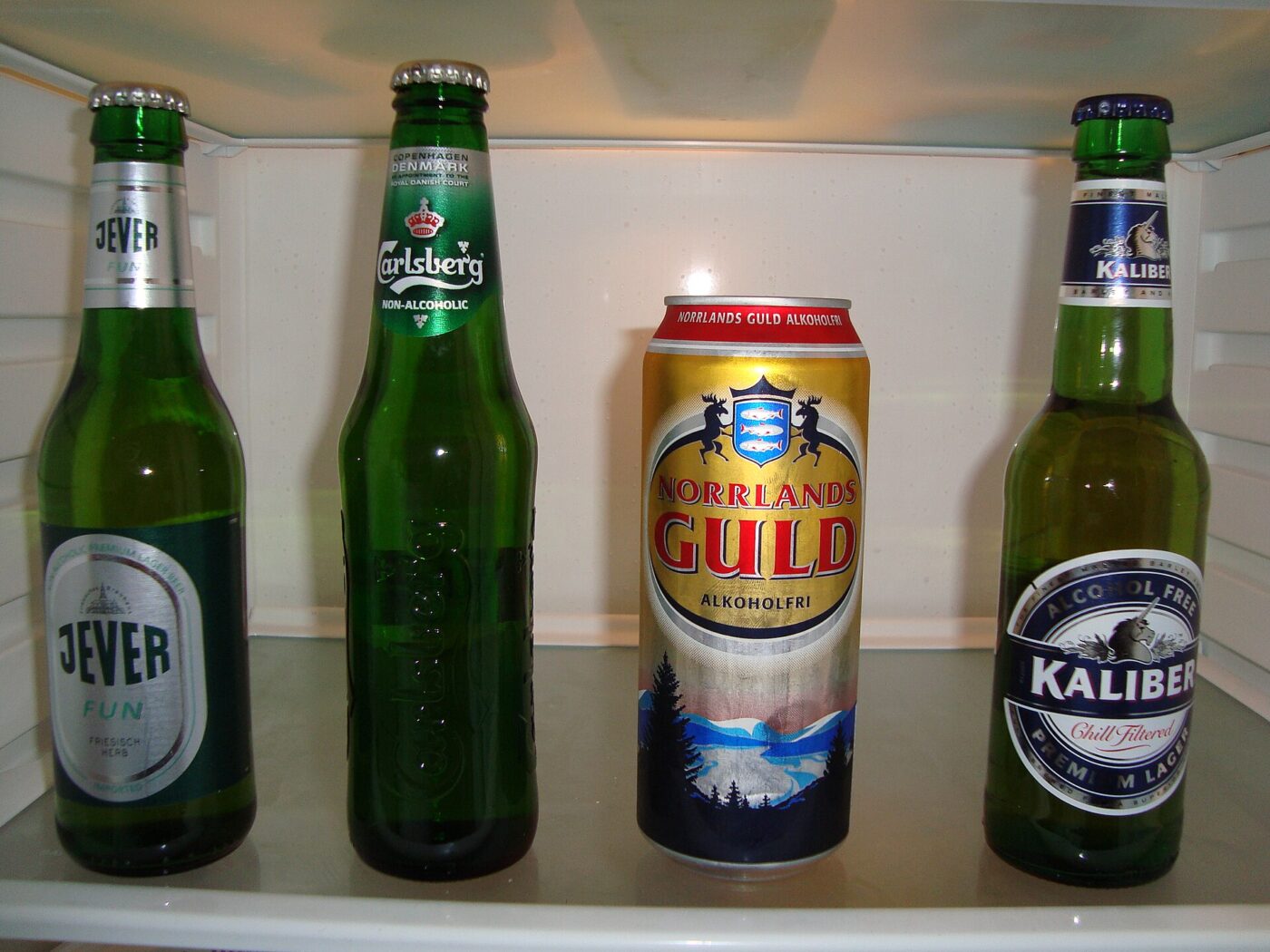
AB InBev’s second-quarter 2026 results, released on July 30, 2026 and filed with the SEC, reported global no-alcohol beer revenue up 27%, leading a Balanced Choices portfolio that grew revenue 13%. In the U.S., the company said its no-alcohol portfolio gained share and grew revenue in the mid-thirties percent, led by Michelob Ultra Zero, which it called the number-one share gainer in no-alcohol beer. That growth came while AB InBev’s total U.S. sales to retailers fell 1.9% in what it described as a soft industry.
Heineken’s first-half 2026 results pointed the same direction. Its low- and no-alcohol segment grew volume 12%, faster than premium beer at 6%, while total volume rose 1.6%. The company called its performance in the Americas softer than in its focus markets in Asia Pacific and Africa and the Middle East.
The largest brewers are growing no-alcohol beer by double digits while their core beer volume is flat to down.
Counter-signals, and where to start
Keep the scale in mind. Double-digit growth at AB InBev and Heineken describes fast-growing portfolios, not a category that has replaced beer, and Gallup found beer is still the preferred drink of 36% of U.S. drinkers, ahead of liquor at 32% and wine at 30%. The decline in the drinking rate also paused in 2026, and IWSR found Gen Z’s participation rate in the U.S. is now higher than that of the legal-drinking-age population as a whole.
For shoppers, the practical question is which substitute fits the occasion. Non-alcoholic beer is where the big brewers are putting their growth, judging by their results. Zero-proof spirits are designed to stand in for gin, whiskey or tequila in mixed drinks, and a basic shaker set covers mocktails at home. Check the listed alcohol by volume on any label, since it varies by product, and check whether a seller ships beverages to your state.
What to watch next
- Gallup’s next Consumption Habits survey; the 2025 and 2026 editions were both fielded in July and published in August
- AB InBev and Heineken third-quarter updates, for whether no-alcohol growth holds at double digits
- IWSR’s 2026 volume data, for whether no-alcohol remains one of the few growing categories
Where to start
Paid links: we earn a commission if you buy through the buttons below, at no extra cost to you. As an Amazon Associate I earn from qualifying purchases.
Non-alcoholic options for home, by occasion
| Product type | Good fit for | Where to look |
|---|---|---|
| Non-alcoholic beer variety pack | Fits beer drinkers cutting back | See listings on AmazonOpens Amazon search results, not one listing: check the model on the product page. |
| Zero-proof spirit alternative | Fits cocktail-style drinks | See listings on AmazonOpens Amazon search results, not one listing: check the model on the product page. |
| Cocktail shaker set | Fits mocktails at home | See listings on AmazonOpens Amazon search results, not one listing: check the model on the product page. |
Product types that fit the trend described above, not tested models. Check the exact listing before you buy. How we pick them.
Non-alcoholic beer variety pack
Where to look: Amazon
The simplest swap for a beer occasion. A variety pack helps you find a style you like before you buy a case.
- Mixed packs let you sample styles
- The category big brewers are growing
- Taste varies widely by style
- Shipping rules vary by state
Zero-proof spirit alternative
Where to look: Amazon
For people who drink cocktails more than beer. Check which spirit the bottle is meant to replace and the sugar per serving.
- Stands in for a spirit in mixed drinks
- One bottle covers many servings
- Built for mixing more than sipping
- Sugar content varies
Cocktail shaker set
Where to look: Amazon
Useful for anyone mixing drinks at home, with or without alcohol. Check that a strainer is included.
- Works with juices, syrups and zero-proof spirits
- Reusable
- One more thing to store
- Strainer quality varies
More: Food and Drink trends and how the Trend Signal is scored.
Sources
- Americans’ Drinking Remains at Record Low — Gallup
- U.S. Drinking Rate at New Low as Alcohol Concerns Surge — Gallup
- AB InBev Reports Second Quarter 2026 Results, Exhibit 99.1 to Form 6-K — AB InBev via SEC EDGAR
- HEINEKEN N.V. reports 2026 half year results — Heineken
- Boomers drive TBA declines as Gen Z steps up — IWSR
- A major reset: beverage alcohol volumes fall again in 2025 — IWSR
Questions readers ask
Is non-alcoholic beer growing in 2026?
Yes, at the largest brewers. AB InBev reported global no-alcohol beer revenue up 27% in the second quarter of 2026 and U.S. no-alcohol revenue up in the mid-thirties percent, and Heineken reported low- and no-alcohol volume up 12% in the first half of 2026.
What percentage of Americans drink alcohol in 2026?
Gallup’s July 1–19, 2026 survey found 54% of U.S. adults drink, matching the 2025 record low in its nearly 90-year trend and down from 62% in 2023.
Who buys non-alcoholic beer, wine and spirits?
Gallup found 17% of adults had one instead of an alcoholic drink in the past year, including 20% of drinkers and 14% of non-drinkers. Among drinkers who use them, 38% said they are drinking more of them than before, versus 17% who are drinking less.
Is alcohol consumption falling around the world?
IWSR reported that total beverage alcohol volumes fell 2% in 2025, the third straight yearly decline, and that volumes in the top 15 markets fell 3%, with RTDs and no-alcohol the only major categories to avoid declines.