Two government price series explain this purchase better than any product page. Since August 2019 the consumer price index for motor vehicle maintenance and repair has risen 56.1%. The index for motor vehicle parts and equipment has risen 29.0%. Over the 12 months to August 2026 the split was 5.2% against 0.9%. What keeps getting more expensive is the service, not the component.
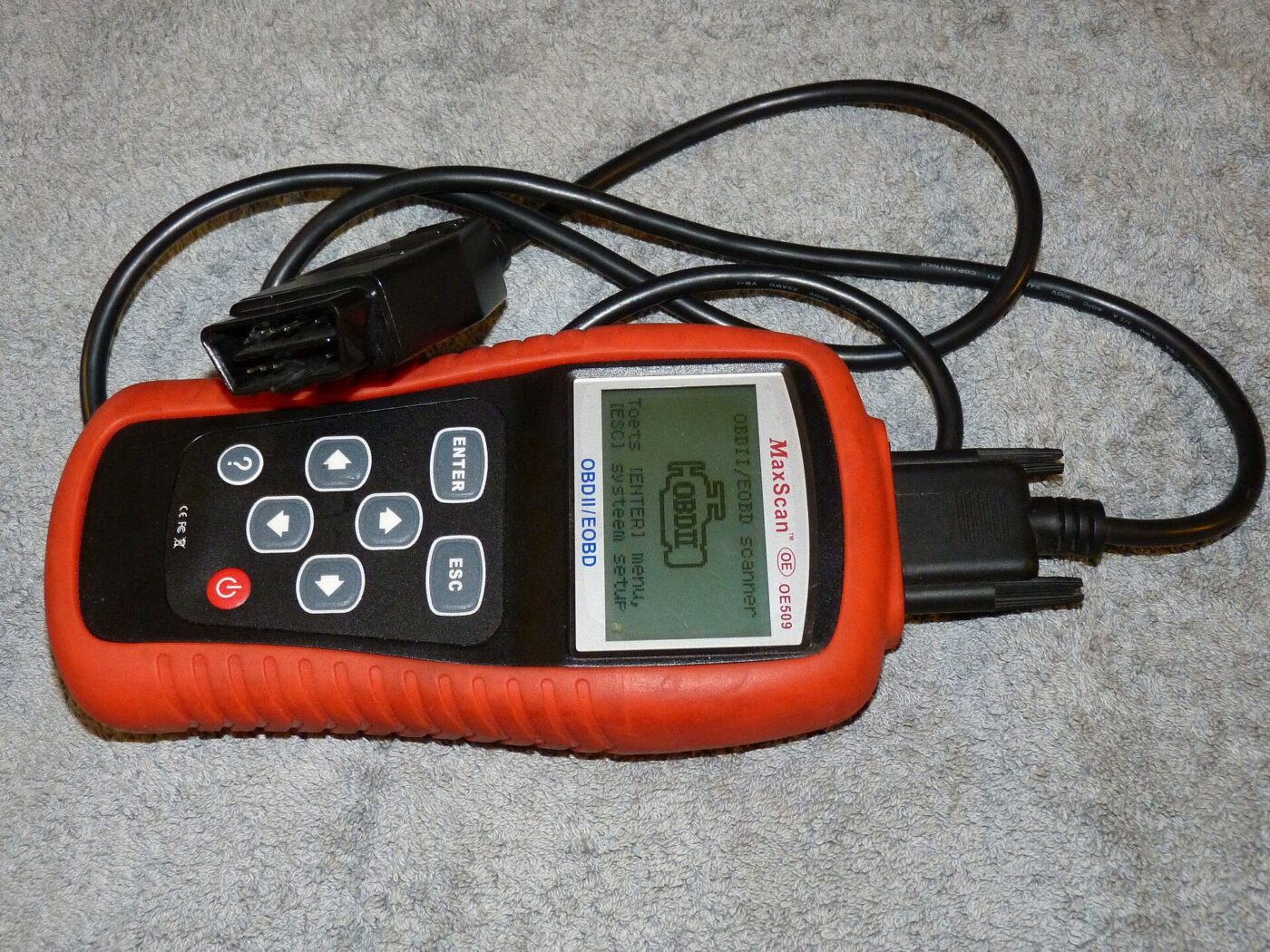
A scan tool installs nothing and will not change a belt. What it buys is information before the work starts, and it works because the federal government standardized the socket, the code set and the warning lamp decades ago. Amazon’s autocomplete shows buyers sorting by exactly that: the completions for obd2 scanner run to live data, bidirectional, and with abs and srs. The regulation explains why those qualifiers are not equal.
Trend Signal
56/100 Steady momentum
- Emerging
- Rising
- Mainstream
- Peaking
- Cooling
Repair prices keep outrunning the parts they install
The consumer price index for motor vehicle maintenance and repair rose 5.2% in the 12 months to August 2026 and 56.1% since August 2019, while motor vehicle parts and equipment rose 0.9% and 29.0% across the same spans. The 12-month changes are BLS figures; the seven-year changes are our calculation from the index values.
Our editorial reading of the cited data, not a forecast. How it is scored
By the numbers
- +56.1%CPI motor vehicle maintenance and repair, Aug 2019 to Aug 2026, our calculationFederal Reserve Bank of St. Louis
- +29.0%CPI motor vehicle parts and equipment, Aug 2019 to Aug 2026, our calculationFederal Reserve Bank of St. Louis
- +5.2%CPI for motor vehicle maintenance and repair, 12 months to August 2026U.S. Bureau of Labor Statistics
- 1996Model year from which inspection covered light-duty vehicles with OBD systemsFederal Register
The two price lines behind the purchase
BLS publishes motor vehicle maintenance and repair and motor vehicle parts and equipment as separate consumer price index series. Side by side they describe a long divergence. The repair series stood at 465.136 in August 2026 on the 1982 to 1984 base, against 297.884 in August 2019. The parts series moved from 146.368 to 188.873 across the same seven years.
The divergence is not steady. On the same arithmetic, parts rose 13.4% in the 12 months to August 2022 then fell 0.5% in the year to August 2024, while repair rose 12.0% in the year to August 2023 and 8.5% in the year to August 2025.
For an owner that is the arithmetic behind a tool purchase. We read a scanner as competing with the first increment of a repair bill, the diagnostic charge, rather than with the repair itself. Our price work on tires going flat while installation kept climbing found the same shape in a different aisle.
| CPI series | 12 months to Aug 2026 | Aug 2019 to Aug 2026 |
|---|---|---|
| Motor vehicle maintenance and repair | +5.2% | +56.1% |
| Motor vehicle parts and equipment | +0.9% | +29.0% |
The repair index has outrun the parts index by nearly two to one since 2019. A scanner buys back part of the diagnosis.
What federal rules guarantee a scanner can read
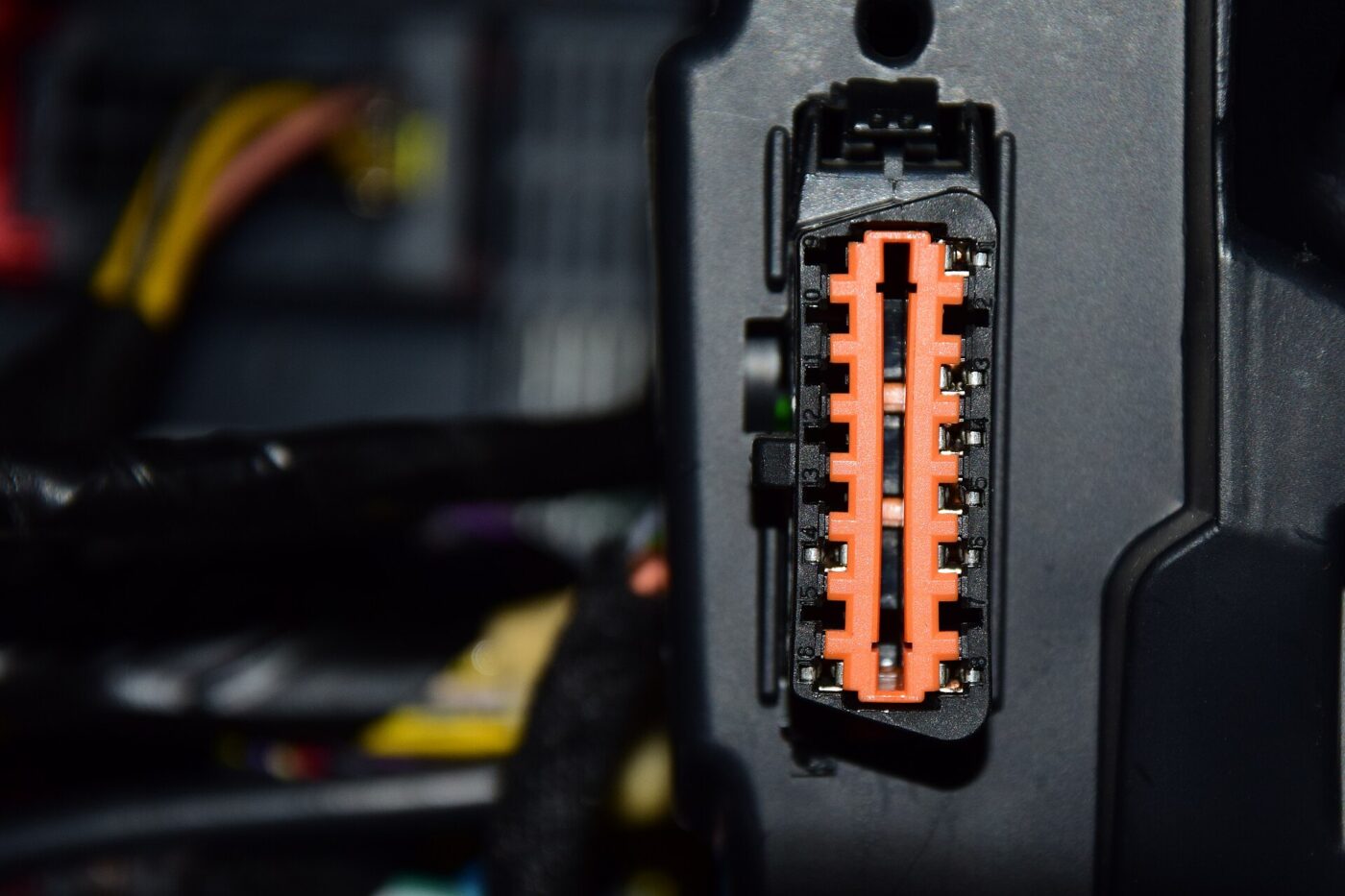
The reason a cheap dongle talks to a twenty-year-old car is regulation. EPA’s rule at 40 CFR 86.1806-17 states that model year 2017 and later vehicles must have onboard diagnostic systems, and that those systems must generally detect malfunctions in the emission control system, store trouble codes corresponding to detected malfunctions, and alert operators appropriately. The same section requires compliance with the 2013 OBD requirements adopted for California at Title 13, section 1968.2 of the California Code of Regulations.
Standardization reaches past the lamp. The federal text references generic SAE J2012 trouble codes, including examples such as P0456, and SAE J1979 test results by mode. A 1996 Federal Register rule on the inspection side specified that the test system interface to the vehicle shall include a plug conforming to SAE J1962, and applied inspection to 1996 and newer light-duty vehicles and light-duty trucks equipped with certified OBD systems. That is the 16-pin socket under your dashboard, and it is why the code your scanner reads is the code the shop reads.
The inspection rules also treat the lamp as a signal that has to work: a vehicle fails when the malfunction indicator light is commanded to be illuminated and is not visually illuminated.
What the federal requirement does not cover
All of that regulation is written around the emission control system. What follows is our reading rather than anything a source states: a requirement aimed at detecting emission control malfunctions promises nothing about access to the antilock brake module or the airbag module. That is why the Amazon completions with abs and srs and bidirectional exist as separate qualifiers, and why we treat coverage as a per-make, per-model-year list from the tool maker rather than a standard.
The useful check is whether your make and model year appear by name for the function you want, not whether the box says all vehicles.
Brakes and airbags are safety systems. Reading a stored code is information; clearing it is not a repair, and a brake or airbag fault belongs with a qualified shop following the vehicle maker’s service procedure.
A code is a clue, not a diagnosis
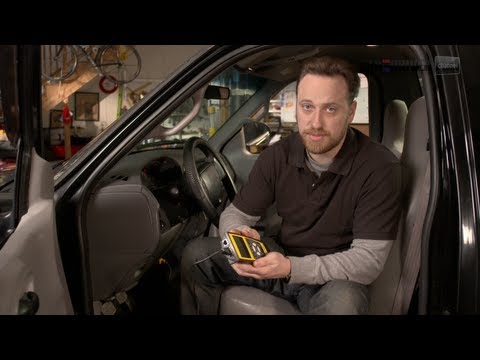
A generic powertrain code names a symptom the computer noticed inside a monitor the regulation defines. The 40 CFR text shows how narrow those definitions are: for model year 2017 and later vehicles the evaporative monitor has to detect a leak with an effective diameter at or above 0.020 inches, when monitoring conditions are satisfied, and set a specific generic code. That tells you a threshold was crossed, not which part crossed it.
This is where live data earns its place in the completions list. A code is a single event; a live parameter stream lets you watch a sensor while it misbehaves. Readiness monitors matter for the same reason: the inspection framework turns on whether they have run, so monitor status tells you whether a car is ready to be tested.
Keep the savings honest. DOE’s maintenance page puts the mundane wins at 1% to 2% for the recommended grade of motor oil and 0.6% on average for correct tire pressure. A scanner decides what to pay someone to do; it is not a fuel-saving device.
Which tier of tool fits which owner
If the object is to know what a light means before calling a shop, the cheapest tier does it. Generic codes and readiness monitors are standardized, so a phone-paired dongle reaches the data the regulation guarantees. That tier also suits a car being inspected before purchase, which we covered in our note on whether to buy a used car now.
If the object is to diagnose rather than translate, the step up is live data: a handheld that graphs parameters while the engine runs. If the object is to command a component or reach brake and airbag modules, the bidirectional tier is the only one that does it, and the coverage list is the purchase.
We read the category as mainstream and steady. The socket has been standard since the 1996 model year and the codes are defined in federal regulation. What changed is the price of the work on the other side of the counter.
What to watch next
- The monthly BLS release for motor vehicle maintenance and repair, for whether the 12-month pace stays near 5%.
- The motor vehicle parts and equipment index, which fell 0.5% in the year to August 2024 and has been the quieter series since.
- Whether a bidirectional tool’s published coverage list names your make and model year, rather than claiming all vehicles.
Where to start
Paid links: we earn a commission if you buy through the buttons below, at no extra cost to you. As an Amazon Associate I earn from qualifying purchases.
Scanner tiers compared on what data they actually reach
| Product type | Good fit for | Where to look |
|---|---|---|
| Bluetooth OBD2 dongle | Fits translating a warning light | See listings on AmazonOpens Amazon search results, not one listing: check the model on the product page. |
| Handheld scanner with live data | Fits watching a sensor misbehave | See listings on AmazonOpens Amazon search results, not one listing: check the model on the product page. |
| Bidirectional scan tool | Fits owners doing their own work | See listings on AmazonOpens Amazon search results, not one listing: check the model on the product page. |
Product types that fit the trend described above, not tested models. Check the exact listing before you buy. How we pick them.
Bluetooth OBD2 dongle
Where to look: Amazon
The tier matched to what regulation guarantees: generic powertrain codes and monitor status. Enough to decide whether a light means a gas cap conversation or a shop visit.
- Reaches the standardized generic codes
- Pocketable and cheap
- Depends on a phone app
- Little module coverage
Handheld scanner with live data
Where to look: Amazon
The step that turns a single stored event into a picture over time. Read the published parameter list, since that is what separates units at this tier.
- Graphs parameters while running
- No phone pairing to fail
- Costs more than a dongle
- Menus vary between units
Bidirectional scan tool
Where to look: Amazon
The tier that reaches outside what the federal OBD rule requires, which is why we treat its coverage list as the specification that matters.
- Reaches beyond emissions data
- Can actuate on supported vehicles
- Coverage is per make and year
- Brake and airbag work belongs in a shop
More: Auto and EVs trends and how the Trend Signal is scored.
Sources
- Onboard diagnostics, 40 CFR 86.1806-17 — U.S. Government Publishing Office
- Inspection and Maintenance Program Requirements, final rule, August 6, 1996 — Federal Register
- CPI for All Urban Consumers: Motor Vehicle Maintenance and Repair — Federal Reserve Bank of St. Louis
- CPI for All Urban Consumers: Motor Vehicle Parts and Equipment — Federal Reserve Bank of St. Louis
- Consumer Price Index news release, August 2026 results — U.S. Bureau of Labor Statistics
- Keeping Your Car in Shape — U.S. Department of Energy fueleconomy.gov
Questions readers ask
Will a cheap OBD2 scanner work on my car?
If it is a 1996 or newer light-duty vehicle sold in the United States, the interface is standardized: a 1996 Federal Register rule specified a test system plug conforming to SAE J1962 and applied inspection to 1996 and newer light-duty vehicles and trucks with certified OBD systems. Generic powertrain codes are standardized too. Anything past that depends on the tool’s coverage list.
What does bidirectional mean on a scan tool?
It means the tool can send commands to a module rather than only read from it. The rule at 40 CFR 86.1806-17 is written around detecting emission control malfunctions, storing codes and alerting the operator, and says nothing about commands or other modules. We read bidirectional function and brake or airbag access as coming from the tool maker, per vehicle, rather than from the rule.
Can clearing a code fix the problem?
No. Federal inspection rules treat the lamp as a signal that has to work: a vehicle fails when the malfunction indicator light is commanded to be illuminated and is not visually illuminated. Erasing a code removes the message, not the fault, and the code returns once the monitor runs again.
What are readiness monitors and why do they matter?
They are the self-tests an OBD system runs on its own subsystems, and the inspection framework turns on whether they have completed. A tool that displays monitor status tells you whether a vehicle is ready to be tested, which is separate from whether a warning lamp is lit.