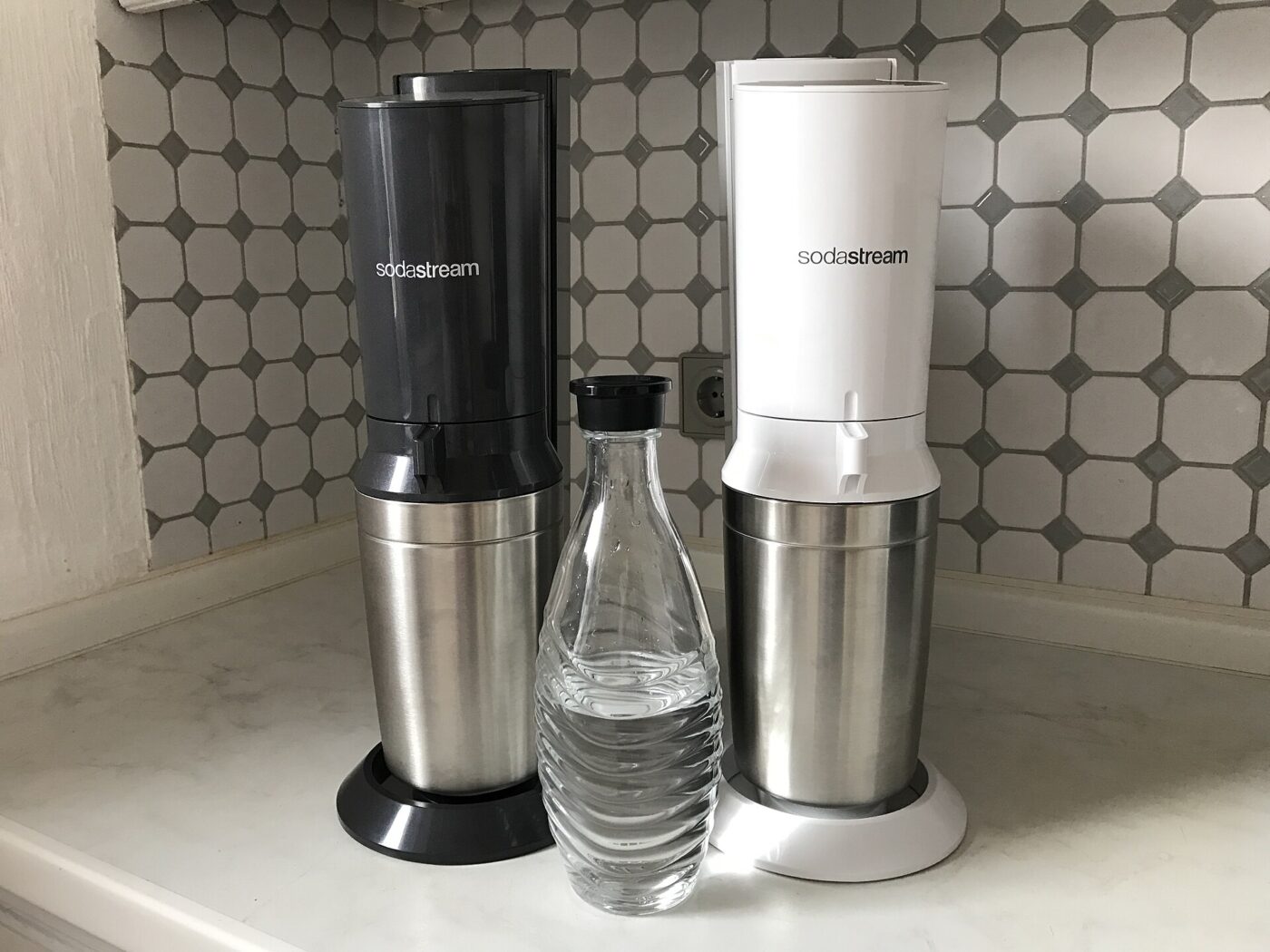
The case for a countertop sparkling water maker was always arithmetic. Buy the machine once, pay for carbon dioxide, stop hauling cases of seltzer home and stop putting the cans out for collection. For a decade that pitch was strong enough that PepsiCo paid billions for SodaStream and put it in its international beverage segment alongside the concentrate business.
The filings from 2026 say the arithmetic has not been winning. PepsiCo has told investors two years running that the SodaStream unit’s estimated fair value only narrowly exceeds what it is carried at on the balance sheet. At the same time the thing a machine replaces has kept getting more expensive: National Beverage, the company behind LaCroix, put through a 5.2% increase in average selling price per case in its fiscal 2026 while shipping 6.7% fewer cases.
Trend Signal
30/100 Weak momentum
- Emerging
- Rising
- Mainstream
- Peaking
- Cooling
PepsiCo says the SodaStream unit only narrowly clears its carrying value
PepsiCo wrote down $862 million of SodaStream intangibles in 2023 and told investors that as of December 27, 2025 the estimated fair value of the SodaStream reporting unit only narrowly exceeded its carrying value.
Our editorial reading of the cited data, not a forecast. How it is scored
By the numbers
- $862MPepsiCo impairment charge on SodaStream intangible assets recorded in 2023SEC filing
- +5.2%Rise in National Beverage average selling price per case in fiscal 2026SEC filing
- 6.7%Decline in National Beverage case volume in fiscal 2026SEC filing
- 3.5%US price increase for juices and nonalcoholic drinks in the year to August 2026Bureau of Labor Statistics
What PepsiCo’s own filing says

SodaStream sits inside PepsiCo’s International Beverages Franchise segment, which the company says manufactures and distributes SodaStream sparkling water makers and related products. In 2023 PepsiCo recorded an $862 million impairment against SodaStream intangible assets, part of a wider $1.23 billion of impairment and other charges that year.
The language since then is the part worth reading. In its annual report covering the year ended December 27, 2025, PepsiCo wrote that the estimated fair value of the SodaStream reporting unit narrowly exceeded its carrying value, and that given the low coverage there could be further impairment if sales and operating profit do not match forecasts. Its previous annual report used the same wording about December 28, 2024.
That is a company saying, in the most formal setting available to it, that the business is worth about what it is carried at and not obviously more. It is not a collapse. It is the signature of a category that stopped compounding.
Two consecutive annual reports describe SodaStream as only narrowly clearing its carrying value.
Meanwhile the cans got more expensive
National Beverage, whose LaCroix brand is one of the largest in US sparkling water, reported net sales of $1,180.6 million for fiscal 2026, ended May 2, 2026, against $1,201.4 million for fiscal 2025, which had an extra selling week. Average selling price per case rose 5.2%. Case volume fell 6.7% across both the sparkling water brands and the carbonated soft drinks, and the company listed inflation and cautious consumer spending among the causes.
Its cost side moved almost in step: average cost of sales per case rose 5.0%, and gross margin held at 37.0% in both years. The price increase covered the cost increase and no more, which is what a squeezed category looks like from the manufacturer’s side. The broader grocery data agree: US prices for juices and nonalcoholic drinks rose 3.5% in the 12 months to August 2026, against 2.2% for all food at home.
| National Beverage, fiscal 2026 | Figure |
|---|---|
| Net sales | $1,180.6 million |
| Net sales, fiscal 2025 | $1,201.4 million |
| Average selling price per case | +5.2% |
| Case volume | –6.7% |
| Average cost of sales per case | +5.0% |
| Gross margin | 37.0% |
The metal tariff sitting under both options
The can is aluminum and the cylinder is steel, so the Section 232 metal tariffs touch both sides of this comparison. Proclamation 11021 of April 2, 2026 restructured them for goods entered on or after April 6, 2026: the duties now apply to the full customs value of aluminum, steel and copper articles and their derivatives, regardless of metal content, at 50% on the metal articles and generally 25% on the derivative articles in its annexes.
Beverage packaging came out mixed. Packaging Dive reported that aluminum lids qualified for the lower 25% derivative rate while aluminum sheet, foil and containers stayed at 50%. The Brewers Association warned that higher input costs would still flow through from suppliers even with the lower lid rate, and the Can Manufacturers Institute said the adjustments kept the status quo. For a shopper that means the cost pressure on canned seltzer is structural, and that the machine is not a clean escape either: cylinders are steel pressure vessels shipped and refilled through the same cost environment.
What a machine actually saves, and what it does not
It saves on the drink. A machine turns tap water into carbonated water, so the per-glass cost is the water plus a share of the cylinder, with no can, label, case or truck in the price. Against seltzer whose price per case rose 5.2% in a year, that gap is widening rather than narrowing.
It does not save on flavor. Plain carbonated water is one product; the flavored canned waters people actually buy are another, and matching them at home means syrups, essences or fruit, which adds cost back. It also does not save on space: the machine, the spare cylinder and the bottles all need a permanent home on a counter that is usually already full.
Before buying, do the arithmetic with your own numbers. Count the glasses your household drinks in a week, price the cylinder exchange at a store near you, and compare it with what you pay per can. Daily drinkers reach break-even quickly; weekend drinkers do not.
- Check which cylinder standard a machine uses and whether an exchange is available locally rather than only by mail.
- Check whether a full cylinder is included with the machine or sold separately.
- Check the printed replacement date on the carbonating bottles, since they are pressure vessels with a service life.
- Check whether the model needs mains power; battery and manual models differ in where they can sit.
Who should buy one now
Daily drinkers with a cylinder exchange nearby are the clear case. The economics of home carbonation rest entirely on volume, and canned seltzer prices are moving the wrong way for anyone buying it by the case. If you already drink plain sparkling water rather than flavored, the substitution is direct.
Occasional drinkers should not bother. A machine used twice a week is an appliance occupying counter space to replace something that costs a few dollars a case. Anyone buying for flavored seltzer should also be honest about what they will do at home, because reproducing it means syrups and fruit rather than carbonation alone. We read PepsiCo’s repeated carrying-value language as evidence that plenty of buyers reached that conclusion already.
What to watch next
- PepsiCo’s next annual report, for whether the SodaStream reporting unit still only narrowly exceeds its carrying value or takes a further impairment.
- National Beverage’s quarterly filings, for whether case volume stops falling once the 5.2% price increase has annualized.
- Whether more beverage packaging moves between the 50% and 25% Section 232 tiers as derivative articles are added on a rolling basis.
Where to start
Paid links: we earn a commission if you buy through the buttons below, at no extra cost to you. As an Amazon Associate I earn from qualifying purchases.
Home carbonation gear compared on running cost and storage
| Product type | Good fit for | Where to look |
|---|---|---|
| Countertop sparkling water maker | Fits replacing canned seltzer | See listings on AmazonOpens Amazon search results, not one listing: check the model on the product page. |
| Spare carbon dioxide cylinder | Fits heavy daily use | See listings on AmazonOpens Amazon search results, not one listing: check the model on the product page. |
| Replacement carbonating bottles | Fits households drinking from glass | See listings on AmazonOpens Amazon search results, not one listing: check the model on the product page. |
Product types that fit the trend described above, not tested models. Check the exact listing before you buy. How we pick them.
Countertop sparkling water maker
Where to look: Amazon
The purchase only pays back on volume. Count the glasses your household drinks in a week before comparing it with a case price.
- Removes the per-can packaging cost
- No cases to carry or recycle
- Permanent counter space
- Plain water only without syrups
Spare carbon dioxide cylinder
Where to look: Amazon
A spare is what turns a machine from a novelty into the default tap. Confirm the thread standard and that somewhere near you exchanges it.
- Avoids running out mid-week
- Exchange is usually cheaper than new
- Cylinder standards are not universal
- Steel costs sit under the price
Replacement carbonating bottles
Where to look: Amazon
Carbonating bottles are pressure vessels with a service life, which is why they carry a date on the base. Check your machine takes glass first.
- No plastic taste over time
- Easy to see fill level
- Heavier and breakable
- Not every machine accepts them
More: Food and Drink trends and how the Trend Signal is scored.
Sources
- PepsiCo, Inc., Form 10-K for the fiscal year ended December 27, 2025 — U.S. Securities and Exchange Commission
- PepsiCo, Inc., Form 10-K for the fiscal year ended December 28, 2024 — U.S. Securities and Exchange Commission
- Proclamation 11021: Strengthening Actions Taken To Adjust Imports of Aluminum, Steel, and Copper — Federal Register via GovInfo
- National Beverage Corp, Form 10-K for the fiscal year ended May 2, 2026 — U.S. Securities and Exchange Commission
- Table 2. Consumer Price Index for All Urban Consumers, August 2026 — U.S. Bureau of Labor Statistics
- Metal tariff adjustments are not a win for packaging, trade groups say — Packaging Dive
Questions readers ask
Is a sparkling water maker still worth it in 2026?
It depends almost entirely on volume. The running cost is tap water plus a share of a carbon dioxide cylinder, with no can, label or case in the price, and canned seltzer keeps getting more expensive: National Beverage raised its average selling price per case 5.2% in fiscal 2026. For a household that drinks plain sparkling water daily the arithmetic works; for occasional drinking it does not.
Is SodaStream in trouble?
PepsiCo has not said that, but its filings are cautious. It recorded an $862 million impairment against SodaStream intangibles in 2023, and in its annual report for the year ended December 27, 2025 it wrote that the unit’s estimated fair value narrowly exceeded its carrying value, with further impairment possible if results miss forecasts.
Why is canned sparkling water getting more expensive?
Costs and metal. National Beverage reported that its average cost of sales per case rose 5.0% in fiscal 2026, almost exactly matching its 5.2% price increase, and US prices for juices and nonalcoholic drinks rose 3.5% in the year to August 2026 against 2.2% for all food at home. Packaging Dive reported that aluminum sheet and containers remained at the 50% tier after the April 2026 Section 232 revision.
Do carbonating bottles expire?
They carry a printed replacement date on the base, because they are pressure vessels rather than ordinary drinks bottles. Check that date when buying a used machine or replacement bottles, and check whether the model accepts glass bottles at all.