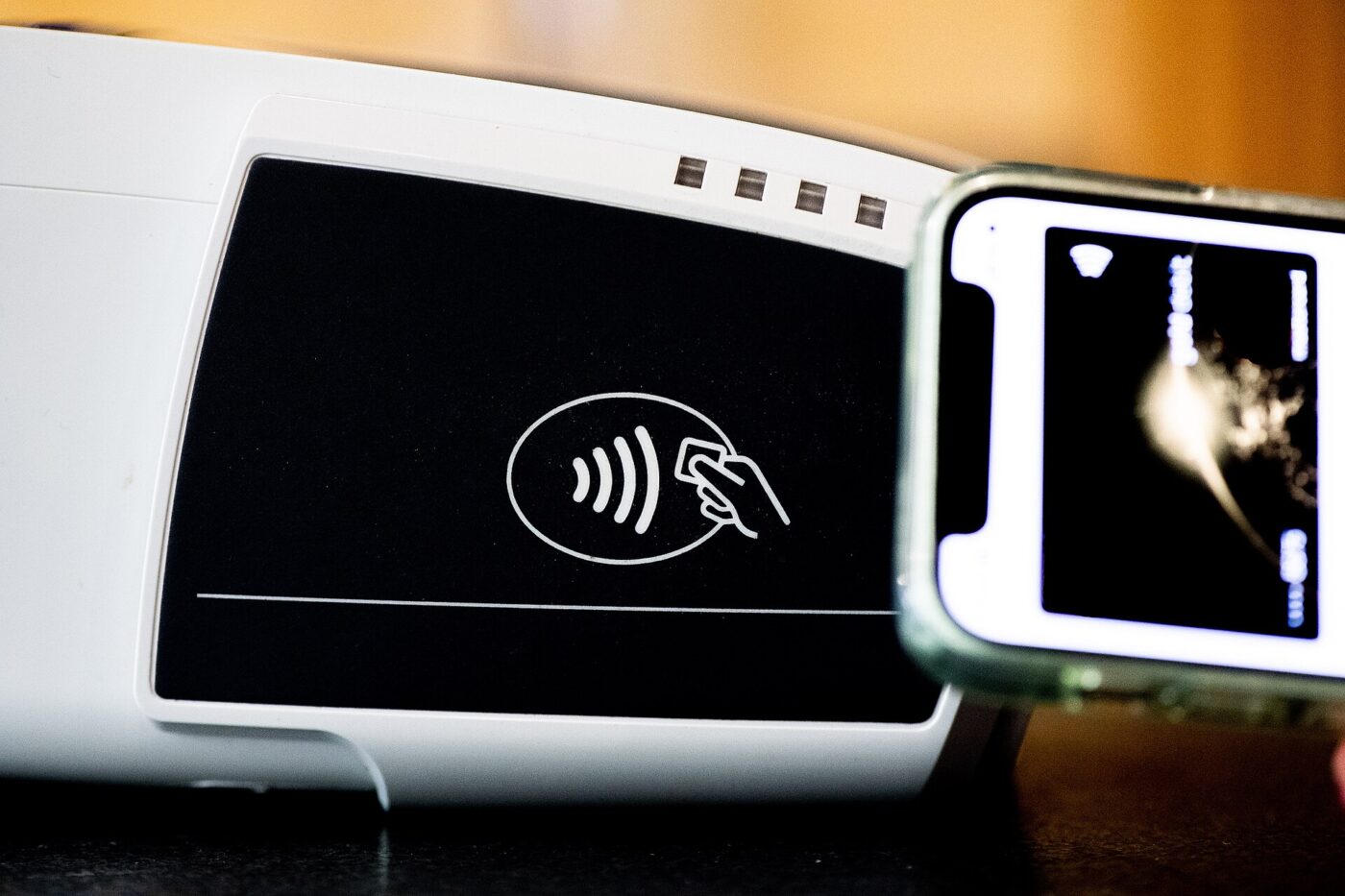
Farmers markets, craft fairs and pop-up stalls were among the last corners of US retail where cash was the default. Two shifts changed that. Consumers moved more of their spending to cards and phones, and the payment apps small vendors already use gained the ability to accept a contactless card on the vendor’s own phone.
That leaves a practical question for anyone setting up a table: is the phone enough, or is a card reader still worth buying? This brief uses Federal Reserve payment data and the published requirements from Apple, Stripe and Square to answer it.
Trend Signal
62/100 Steady momentum
- Emerging
- Rising
- Mainstream
- Peaking
- Cooling
Cash fell to about one in eight payments as phone checkout spread
The Federal Reserve’s 2026 Diary found consumers made six of 47 monthly payments in cash in 2025, against 26% of payments in 2019, and Apple’s US business page shows 13 platforms that offer Tap to Pay on iPhone.
Our editorial reading of the cited data, not a forecast. How it is scored
By the numbers
- 6 of 47Average monthly payments made in cash, of 47 in all, 2026 Diary (October 2025 survey)Federal Reserve
- 26%Share of US consumer payments made in cash in 2019Federal Reserve
- 11Payments per month made with a mobile phone in 2024, up from 4 in 2018Federal Reserve
- $59List price of Square’s chip and contactless Bluetooth reader, September 2026Square
Cash is shrinking, but not to zero
The Federal Reserve’s Diary of Consumer Payment Choice tracks how Americans pay. In 2019, consumers used cash for 26% of all payments and about 47% of payments under $10. By 2024, cash was 14% of payments by number, behind credit cards at 35% and debit cards at 30%. In the 2026 edition, based on October 2025 data, consumers made six of 47 monthly payments in cash, and cards accounted for two-thirds of all payments.
Phones are the fastest-moving piece. Consumers averaged 11 payments a month with a mobile phone in 2024, up from four in 2018, and adults aged 18 to 24 used a phone for 45% of their payments, according to the 2025 findings.
Cash has not disappeared, and the places it persists overlap with market trade. Four out of five consumers used cash in the prior 30 days, 76% carried cash averaging $69, and rural residents averaged nine cash payments a month against six in urban and suburban areas. Households earning under $25,000 a year and adults 55 and older relied more on cash, and 90% of consumers said they plan to keep using it.
Take cards because most buyers expect to pay that way, and keep a cash float because many still carry it.
What Tap to Pay needs from your phone
Apple announced Tap to Pay on iPhone on February 8, 2022, as a way for merchants to accept contactless cards, Apple Pay and other digital wallets without an added payment terminal. It requires an iPhone XS or later, and Apple’s US business page shows the logos of 13 platforms that offer it, including Square, Shopify, PayPal Zettle, Clover, GoDaddy, Venmo and WooCommerce, with a fuller list on its developer site.
Android support depends on the app. Stripe’s documentation for Tap to Pay on Android requires an NFC-equipped device running Android 13 or later, a security update installed within the past 12 months, Google Mobile Services with the Play Store, an unrooted and unmodified operating system with developer options disabled, and a stable internet connection. It supports PIN entry, but Stripe notes that cards needing insertion for a PIN, common in Canada and Finland, cannot be handled by tap and suggests a card reader or a payment link instead.
Cost is the draw. Square says sellers do not need to purchase hardware, and it lists one in-person rate, 2.6% plus 15 cents on its free plan, for tapped, dipped or swiped payments. A keyed-in card number costs 3.5% plus 15 cents, which is the price of typing a card in when a tap fails.
What a $59 reader adds
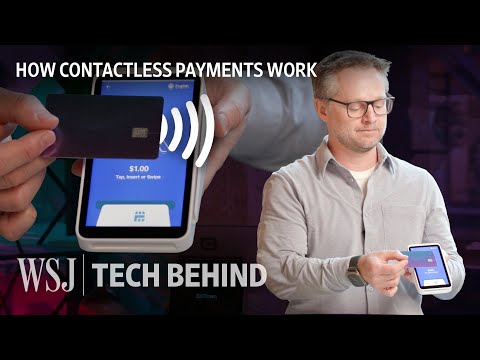
Square’s contactless and chip reader lists at $59 and pairs over Bluetooth. It accepts chip cards, contactless cards, Apple Pay and Google Pay; swipes need Square’s separate magstripe reader. Its most market-relevant feature is offline mode: Square says the reader can keep taking payments for up to 24 hours without internet, processing them when it reconnects and declining any that are not reconnected in that window.
That covers the two weak spots of phone-only checkout: cards that need to be inserted and patchy signal at fairgrounds, parking lots and rural markets. The trade-off is that an offline payment is only confirmed later, so a card that declines on reconnection is a sale the vendor has already handed over.
| Feature | Tap to Pay on a phone | Bluetooth reader (Square example) |
|---|---|---|
| Extra hardware | None; iPhone XS or later, or Android 13+ with NFC for Stripe | $59 reader |
| Chip insertion | No | Yes |
| Magnetic-stripe swipe | No | No |
| Without internet | Stripe lists a stable connection as an Android requirement | Offline mode up to 24 hours |
| Square in-person rate, free plan | 2.6% + 15 cents | 2.6% + 15 cents |
Who should buy a reader now, and who can wait
A phone alone fits vendors who sell a few times a season, at venues with reliable signal, to customers who mostly tap. The setup cost is zero beyond a supported phone, and at Square the per-sale rate is the same as with a reader.
A reader earns its $59 for vendors who sell weekly, work rural or outdoor sites where signal drops, or regularly meet cards that must be inserted. Vendors with an iPhone older than the XS, or an Android phone that misses their payment app’s device rules (Stripe’s include Android 13 or later and a recent security patch), need one too, because Tap to Pay will not run on those devices.
Both groups should keep a cash box. The Fed data shows cash use concentrated among rural, lower-income and older consumers, groups well represented at many markets. Long days also drain a phone that runs a checkout app all afternoon, so a battery pack belongs in the kit whichever payment route a vendor picks.
What to watch next
- The next Federal Reserve Diary of Consumer Payment Choice findings; the 2025 and 2026 editions were both published in May
- Changes to Stripe’s Tap to Pay on Android device rules, which Stripe says can change with compliance or security updates
- Additions to Apple’s list of payment platforms that support Tap to Pay on iPhone in the US
Where to start
Paid links: we earn a commission if you buy through the buttons below, at no extra cost to you. As an Amazon Associate I earn from qualifying purchases.
Market-table checkout kit by the problem it solves
| Product type | Good fit for | Where to look |
|---|---|---|
| Chip and contactless card reader for your POS app | Fits frequent or low-signal markets | See listings on AmazonOpens Amazon search results, not one listing: check the model on the product page. |
| Locking cash box with removable tray | Fits cash-paying customers | See listings on AmazonOpens Amazon search results, not one listing: check the model on the product page. |
| High-capacity USB-C power bank | Fits all-day phone checkout | See listings on AmazonOpens Amazon search results, not one listing: check the model on the product page. |
Product types that fit the trend described above, not tested models. Check the exact listing before you buy. How we pick them.
Chip and contactless card reader for your POS app
Where to look: Amazon
Worth buying once you sell weekly or at sites with weak signal. Buy the reader your payment app supports, and check its offline rules before relying on them.
- Takes chip cards
- Offline mode on some models
- One more device to charge
- Tied to one payment platform
Locking cash box with removable tray
Where to look: Amazon
Cash is a minority of payments nationally but a real share among rural and older buyers. Check that the tray holds the coins and bills you give as change.
- No fees on cash sales
- Tray keeps change sorted
- Needs a float and counting
- Security depends on you
High-capacity USB-C power bank
Where to look: Amazon
A phone running a checkout app for hours drains fast. Check the output rating and cable type against your phone and reader.
- Keeps the phone and reader running
- Useful for any setup
- Adds weight to the kit
- Needs recharging between markets
More: Small Business and Side Hustles trends and how the Trend Signal is scored.
Sources
- 2026 Findings from the Diary of Consumer Payment Choice — Federal Reserve Financial Services
- 2025 Findings from the Diary of Consumer Payment Choice — Federal Reserve Financial Services
- 2020 Findings from the Diary of Consumer Payment Choice — Federal Reserve Financial Services
- Apple unveils contactless payments via Tap to Pay on iPhone — Apple Newsroom
- Tap to Pay on iPhone — Apple Business
- Tap to Pay on Android — Stripe Documentation
- Square Reader for contactless and chip — Square
- Square processing fees — Square
Questions readers ask
Do I need a card reader to take cards at a farmers market?
Not necessarily. Tap to Pay on iPhone works on an iPhone XS or later with a supporting app, and Stripe supports compatible Android phones on Android 13 or later. A reader adds chip insertion and, on Square’s $59 model, an offline mode of up to 24 hours.
Does Tap to Pay work without an internet connection?
Stripe lists a stable internet connection as a requirement for Tap to Pay on Android. Square says its reader can keep taking payments offline for up to 24 hours and processes them when it reconnects.
Is a reader more expensive per sale than Tap to Pay?
At Square, no: it lists one in-person rate of 2.6% plus 15 cents on its free plan for tapped, dipped or swiped payments. Keyed-in payments cost 3.5% plus 15 cents.
Should market vendors still accept cash?
Federal Reserve data suggests yes: four out of five consumers used cash within 30 days in the 2025 survey, rural residents averaged nine cash payments a month, and 90% said they plan to keep using cash.