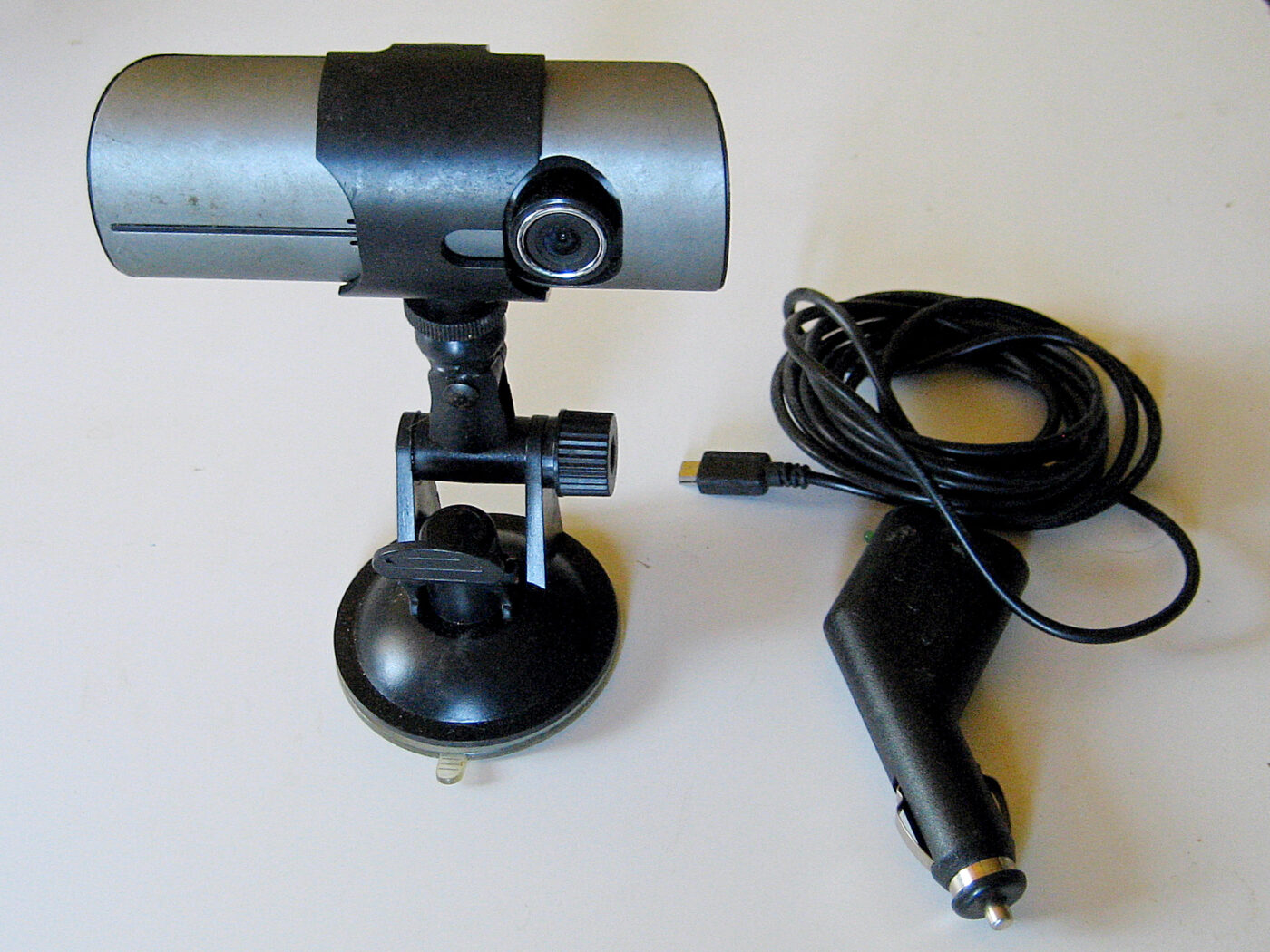
A dash cam used to be a device that ran when the engine ran. The searches people type in October 2026 describe something else: Amazon’s autocomplete for dash cam front and rear returns 24/7 recording, wireless, and wireless with no wire, while Google Trends lists best dash cam 2026 as a Breakout query and dual dash cam up 200% in the United States.
Recording while a car is parked means drawing current while a car is parked, and that is a different product category even when the camera looks the same. The specification that decides whether it works is not resolution. It is the voltage at which the power feed gives up, and the two maker pages we opened do not even present that number the same way.
Trend Signal
71/100 Strong momentum
- Emerging
- Rising
- Mainstream
- Peaking
- Cooling
Round-the-clock recording moved the dash cam from the accessory socket to the fuse box
Both hardwire kits we opened publish a low voltage cutoff — 12.2V +0.25V on one, 11.6V in the technical details of the other — and parking mode draws on the 12-volt battery EPA describes as an enhanced unit in the 58% of new gasoline non-hybrids with stop/start.
Our editorial reading of the cited data, not a forecast. How it is scored
By the numbers
- 12.2VLow voltage cutoff for one dash cam hardwire kit, published as 12.2V +0.25VCobra
- 11.6VLow voltage protection in the technical details of a second maker kitRexing
- 58%New gasoline non-hybrid vehicles with stop/start in model year 2024U.S. Environmental Protection Agency
- 40,000 hrsRecording a 512GB high-endurance microSD card is stated to handleSanDisk
What changed: the camera stopped switching off
The shift is visible in how the product is described rather than in the sensor. Cobra’s hardwire kit page says an ignition detection kit allows instant parking monitoring when the vehicle is turned off, and that a software auto-shutoff setting lets the user set parking monitoring limits. Rexing’s kit page describes keeping the camera in a power-saving mode during inactivity, with the camera entering sleep mode and waking instantly after an impact to record the next 20 seconds.
Those are two different answers to the same problem: a camera that never switches off will eventually flatten the battery it is plugged into. One answer is a timer, the other is an impact trigger, and both still need a floor below which the feed cuts out.
The demand data tracks it. The rising Trends queries are about configuration — dual, 360, mirror — rather than image quality, and when the qualifiers move from megapixels to wiring, the category has moved.
Parking mode is not a feature of the camera so much as a feature of its power supply.
Cutoff voltage is the whole product

A hardwire kit taps a fuse and steps 12 volts down to USB power, and the only safety-relevant number it publishes is the voltage at which it stops. Cobra lists its low voltage cutoff as 12.2V +0.25V, and says the kit instantly shuts off monitoring if low voltage is detected so the user can start the car without issue. Rexing’s page lists low voltage protection of 11.8V in its bullet list and 11.6V for a 12V vehicle in its technical details, which is a contradiction on one product page.
Half a volt sounds trivial and is not. A kit that cuts at 12.2V surrenders surveillance earlier and protects starting; one that holds to 11.6V records longer and leaves less margin. Neither is wrong, but only one of them is what you bought, so the figure belongs in the comparison.
The battery underneath has changed too. EPA’s 2025 Automotive Trends Report puts non-hybrid stop/start at 58% of new gasoline vehicles in model year 2024 and says those vehicles use a larger alternator and an enhanced low-voltage battery, which is the same battery our piece on AGM as the default tracked through the parts aisle. A parasitic draw now lands on a component with a specific job and a specific replacement cost.
| Published spec | Cobra hardwire kit | Rexing smart hardwire kit |
|---|---|---|
| Low voltage cutoff | 12.2V +0.25V as published | 11.8V in bullets, 11.6V in technical details |
| Input and output | DC 12/24V in, DC 5V at 2.5A out | DC 12V-24V in, 5V at 1.5A out on mini-USB |
| Working temperature | Not stated on the page | Minus 22F to 167F |
Cold, heat and the card it writes to
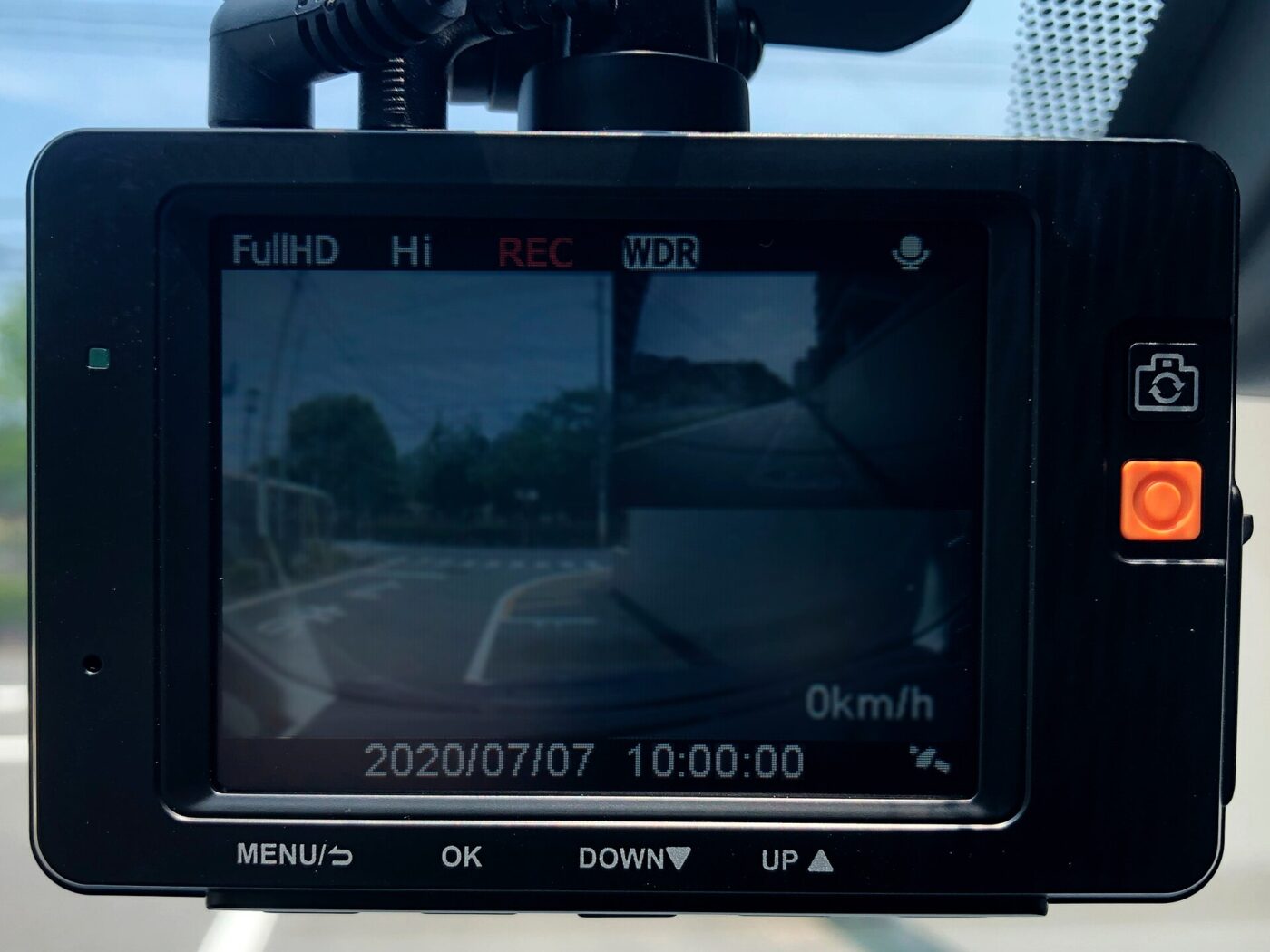
A camera wired for parking mode lives through the full temperature swing of a parked car. Rexing publishes a working temperature of minus 22F to 167F for its kit; Cobra’s page does not state one, which is itself a useful finding when two kits are side by side. The Department of Energy notes that battery performance decreases in cold weather, making it harder for the alternator to keep the battery charged, so winter squeezes both ends of the arrangement: less margin above the cutoff and a camera running at the edge of its range.
The storage is the other consumable. SanDisk states that the 512GB version of its High Endurance microSD card is engineered to handle up to 40,000 hours of recording, and rates the card Class 10 with U3 and V30 video speed, describing it as temperature-proof, waterproof, shockproof and x-ray-proof. A card that is rewritten continuously is doing a different job from one in a phone, and we tracked what that market has been doing in our note on memory card prices.
The practical consequence is a habit rather than a purchase: a camera that has silently stopped writing looks identical to one that is working.
Where a windshield-mounted camera is allowed to sit
State vehicle codes, not the camera maker, decide where a device may be mounted, and they tend to work by listing what is permitted. Minnesota’s statute is a clear example from a winter state: section 169.71 bars driving with objects suspended between the driver and the windshield, then exempts sun visors, rearview mirrors, driver feedback and safety monitoring equipment mounted immediately behind, slightly above or slightly below the rearview mirror, global positioning or navigation systems located near the bottommost portion of the windshield, electronic toll collection devices, and an identifying device under another section.
Two things stand out in that text. It sets mounting positions rather than a size limit, and it does not name dash cams as a category, so the question becomes which listed description a camera fits. Law enforcement and authorized emergency vehicles are exempt from the clause.
Other states word this differently, so the only reliable step is to read your own state code before choosing a mount.
What to settle before you hardwire anything
The order of decisions is: whether you want parking mode at all, then which cutoff the kit publishes, then whether the camera and kit are specified to survive your winter, then the card. Resolution comes last, because an always-on camera that drained the battery or stopped writing has no resolution at all.
If parking mode is not the point, the simplest configuration remains a camera on accessory power and no fuse tap at all. A rear channel adds a cable run through the vehicle that is worth measuring first.
We read this as a market shift rather than a passing search spike. The cameras did not change much; the power arrangement did, and the spec sheet that matters moved from the lens to the fuse box.
What to watch next
- Whether hardwire kits start publishing one cutoff figure consistently, since one kit we read lists two different numbers on its own page.
- Whether camera makers publish an operating temperature range as plainly as they publish resolution.
- Your own state vehicle code on windshield mounting, which is written as a list of permitted items rather than a size allowance.
Where to start
Paid links: we earn a commission if you buy through the buttons below, at no extra cost to you. As an Amazon Associate I earn from qualifying purchases.
Dash cam parts compared on what the makers actually publish
| Product type | Good fit for | Where to look |
|---|---|---|
| Dash cam hardwire kit | Fits round-the-clock parking mode | See listings on AmazonOpens Amazon search results, not one listing: check the model on the product page. |
| Front and rear dash cam set | Fits recording both directions | See listings on AmazonOpens Amazon search results, not one listing: check the model on the product page. |
| High-endurance microSD card | Fits constant rewriting | See listings on AmazonOpens Amazon search results, not one listing: check the model on the product page. |
Product types that fit the trend described above, not tested models. Check the exact listing before you buy. How we pick them.
Dash cam hardwire kit
Where to look: Amazon
The part that makes parking mode possible and the part that protects the battery. Compare the published cutoff and the working temperature, since one page we read states both and the other states neither.
- Publishes a cutoff voltage
- Frees the accessory socket
- Taps a fuse circuit
- Cutoff figures vary between makers
Front and rear dash cam set
Where to look: Amazon
The configuration buyers ask for by name. Measure the run from the windshield to the rear glass before ordering, because the supplied cable length is the limiting spec.
- Covers rear impacts
- Matches the common search
- Adds a long cable run
- Rear unit needs its own mounting spot
High-endurance microSD card
Where to look: Amazon
Written for cameras rather than phones. One maker states up to 40,000 hours of recording for its 512GB card, which is a durability claim rather than a speed claim.
- Rated for continuous rewriting
- High capacities available
- Costs more per gigabyte
- Still a wear part
More: Auto and EVs trends and how the Trend Signal is scored.
Sources
- Hardwire Kit, Fuse Box to USB Power Adapter — Cobra
- Smart Hardwire Kit, Mini-USB port — Rexing
- Minnesota Statutes section 169.71, Windshield — Office of the Revisor of Statutes
- The 2025 EPA Automotive Trends Report — U.S. Environmental Protection Agency
- Fuel Economy in Cold Weather — U.S. Department of Energy fueleconomy.gov
- SanDisk High Endurance microSD Card — SanDisk
Questions readers ask
Will parking mode drain my car battery?
That is what the cutoff voltage is for. Cobra publishes a low voltage cutoff of 12.2V +0.25V and says the kit instantly shuts off monitoring if low voltage is detected; Rexing lists 11.8V in its bullet list and 11.6V for a 12V vehicle in its technical details. A lower cutoff records for longer and leaves less starting margin.
Does cold weather affect a dash cam?
The published figures suggest it affects the whole arrangement. Rexing states a working temperature of minus 22F to 167F for its kit, and the Department of Energy notes that battery performance decreases in cold weather, making it harder for the alternator to keep the battery charged, which shrinks the margin above any cutoff.
Can I legally mount a dash cam on the windshield?
State codes vary, and they are written as lists of permitted objects rather than general allowances. Minnesota section 169.71 bars objects suspended between the driver and the windshield, then exempts items including safety monitoring equipment mounted immediately behind, slightly above or slightly below the rearview mirror. Read your own state code before choosing a mount.