We have not tested a single robot vacuum, and nothing below is written as though we had. This is a comparison of what the makers publish on their own US product pages, read on October 1, 2026, set against the federal recall record for the same brands. The selection rule is narrow on purpose: a model is named here only if it is currently sold in the US, only if its maker publishes a dock capacity figure on a page we opened, and only after we searched the Consumer Product Safety Commission recall database for that brand on the same day.
That rule matters more in this category than in most, because the dock is the part of a robot vacuum that buyers now shop for and the part that carries the fewest checkable numbers. Amazon’s own search box fills in “robot vacuum self emptying dock” and “robot vacuum self emptying bagless” before it offers a brand. Those are sizing questions, and they have published answers.
Trend Signal
64/100 Steady momentum
- Emerging
- Rising
- Mainstream
- Peaking
- Cooling
Docks are standard on new models, and the consumable is where they differ
SharkNinja, whose Cleaning Appliances line includes robotic vacuums, reported $2,205.8 million in 2025 cleaning sales, up 6.9%, and credited the increase to carpet extraction and cordless vacuums rather than robots, per the 10-K it filed on March 2, 2026.
Our editorial reading of the cited data, not a forecast. How it is scored
By the numbers
- 90 daysHands-free interval iRobot publishes for the Roomba Max 715 AutoEmpty dockiRobot
- 60 daysDebris capacity Shark publishes for the bagless Navigator 2-in-1 self-empty baseSharkNinja
- 3.2 LBase station bag size Dreame publishes for the X40 Ultra, rated up to 75 daysDreame
- NoneFloor-cleaning robot vacuums in the CPSC recall database, our count October 1, 2026CPSC data, our count
What a self-emptying dock changes
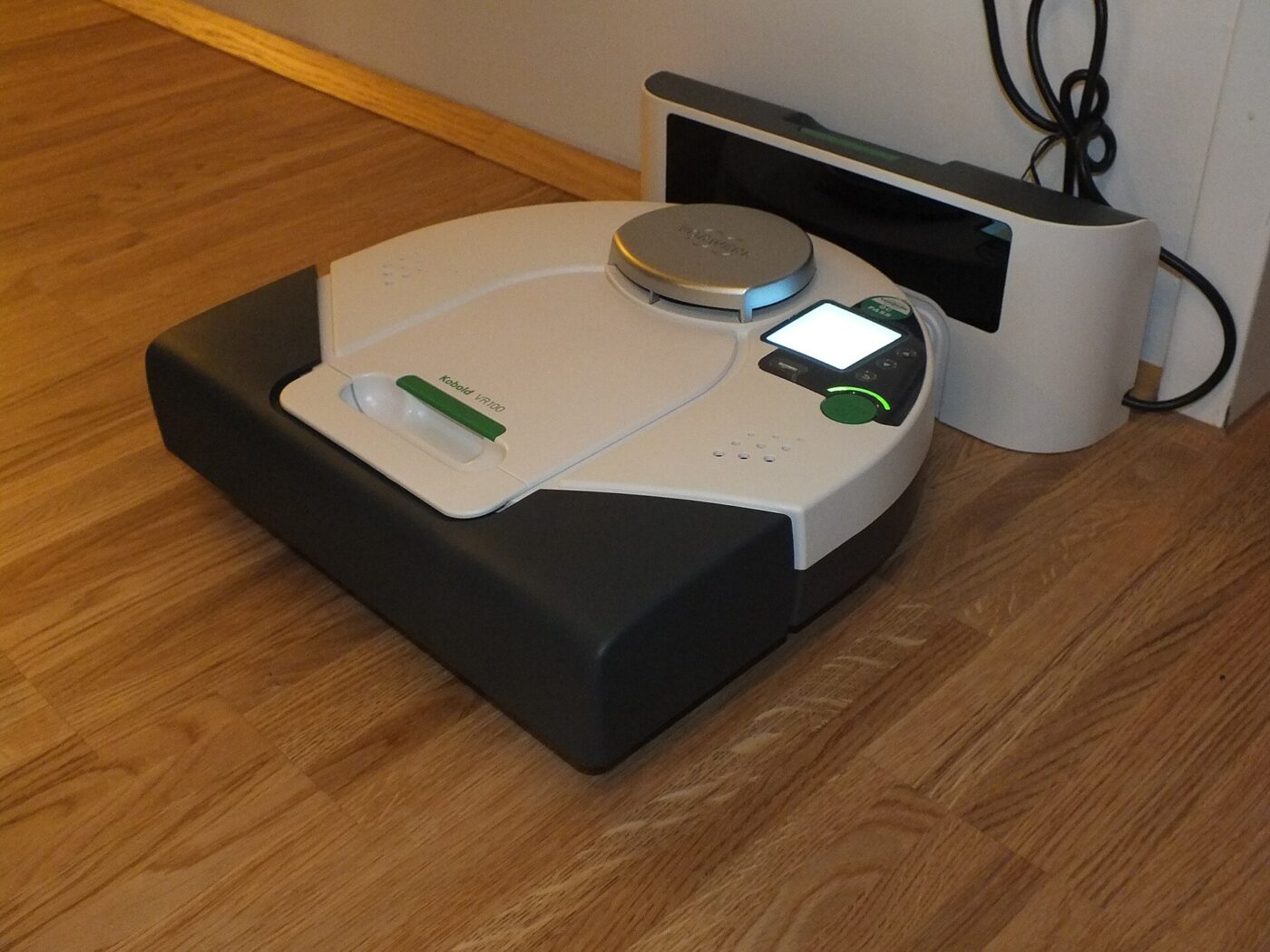
The dock moves debris out of the robot’s small onboard bin into a much larger container in the base, so the robot keeps running without a daily emptying. Every figure printed beside one is a measure of that interval, and the makers word it as a maximum. iRobot describes the Roomba Max 715 AutoEmpty dock as giving “up to 90 days of hands-free maintenance” and says the bag is changed “just 4x per year.” Shark describes the Navigator 2-in-1 base as holding “up to 60 days of debris.” Dreame pairs a 300-milliliter bin on the robot with a 3.2-liter bag in the base “for up to 75 days.”
None of those sentences says anything about how much a robot picks up. They describe volume and a household the maker has in mind, and a home with two shedding dogs will fill a base faster than the page assumes. If filtration is what you are really buying, the rating on the bag or the base filter is the thing to read, and our explainer on what a true HEPA label does and does not promise covers how that wording is policed.
The gain is easy to state without exaggeration: the dock removes a chore, and a sealed bag keeps a dust cloud out of the room.
Treat a dock capacity figure as a maintenance schedule, not a performance claim.
Bagged versus bagless, in the makers own numbers
The split here is no longer lidar versus camera; it is whether the base uses a disposable bag. Bags cost money forever and seal the dust when you pull them. Bagless bases cost nothing and ask you to open a dusty bin every few weeks. Both ship from large brands, and both publish an expected interval.
| Model | What the maker publishes about the dock |
|---|---|
| iRobot Roomba Max 715 Vac plus AutoEmpty dock | Up to 90 days hands-free; odor-control AllergenLock bag; bag changed four times a year |
| Shark Navigator 2-in-1, model RVA120E2 | Bagless base holding up to 60 days of debris with no replacement bags; one-year limited warranty |
| Dreame X40 Ultra | 300 mL bin on the robot, 3.2 L bag in the base, up to 75 days; washboard cleaned during mop cleaning |
| Roborock Saros Z70 | Multi-functional Dock 4.0; retail box 22.05 by 18.19 by 19.76 inches; robot and dock together 38.14 pounds |
| Anker eufy Omni E35 | ThermoFresh station that the page says self-empties, refills and drains |
What the recall database actually returns
We queried the CPSC recall service on October 1, 2026 by product name and recall title for vacuum, robot and robotic, then separately for iRobot, Roomba, Roborock, Ecovacs, Dreame, SharkNinja, Shark, eufy, Anker, Narwal, Neato, Samsung, LG, Lefant, Wyze and Tineco. Not one household floor-cleaning robot vacuum came back. The robot-shaped entries are all outdoors or in the pool: notice 26372, Wybotics robotic pool vacuums, April 9, 2026, about 5,000 units; 25187, Aiper Seagull Pro, March 20, 2025, about 32,660 US units; 23784, Aiper Elite Pro, August 24, 2023, about 22,000; 23158, STIHL iMOW docking stations, March 16, 2023, about 2,700; and 22727, Husqvarna Automower all-wheel-drive mowers, February 17, 2022, about 1,400.
By our count that is five household-robot recalls since 2022 covering roughly 63,760 US units, and the hazard is the same every time: a lithium-ion battery, a charging adapter or a docking station circuit that overheats. Two of the five are docking stations and adapters rather than the robot. The nearest floorcare entries, BISSELL’s Multi Reach vacuums in February 2024 and Rowenta’s cordless vacuums in July 2026, are handheld and stick machines with the same battery failure mode.
An empty result is not a safety rating. It says no robot vacuum has yet been through a CPSC corrective action, not that none will be. It does say where to look: the base is the mains-powered, battery-charging part of the system, and that is what the record keeps flagging in adjacent products.
Across robot categories the recall pattern is charging hardware, which is exactly what a self-emptying dock adds to your floor.
The consumable you will actually buy

Bags are the obvious running cost, and iRobot states the cadence outright at four a year for the Max 715. Shark’s pitch for the Navigator base is the absence of that line item, “without costly replacement bags.” What neither page settles is the filter: bases have their own pre-motor and exhaust filters, and whether those are washable or replacement parts changes the real cost more than the bag does.
Brushes are the second consumable, and the makers describe them in their own vocabulary rather than a spec. iRobot calls the Max 715 arrangement “anti-tangle Dual Rubber Brushes” with an anti-tangle Edge-Sweeping Brush; Shark publishes a “self-cleaning brushroll with anti-hair wrap”; Dreame sells its TriCut anti-tangle brush for the X40 Ultra separately, which its own page states. Whether replacement parts stay available is a separate question, and one that the state repair laws now on the books are slowly reshaping.
A dock also draws power around the clock, since it has to be ready to charge. If you are counting standby loads, our tally of what a smart home costs to leave switched on is the place to start.
Who should skip the dock
A base is a piece of furniture. Roborock ships the Saros Z70 in a retail box of 22.05 by 18.19 by 19.76 inches, and robot and dock together weigh 38.14 pounds. In a studio that is a visible object needing an outlet and clearance, and a dock-free robot may simply fit better.
Shedding is the other test. If one animal is behind most of the dust, dealing with the coat is more effective than enlarging the bin, and home grooming gear costs less than a premium base. And if your interest in robots started with the July 2026 federal rule rather than the floor, our report on what the FCC Covered List addition changed for US buyers covers that ground and we have not repeated it here.
What to watch next
- The CPSC recall list at cpsc.gov/Recalls: a first entry for a floor-cleaning robot would be a real change in this category’s record
- Whether any maker starts publishing dock capacity against a stated test method instead of a flat days figure
- Whether bagless bases spread beyond Shark, since iRobot and Dreame both still ship bags
Where to start
Paid links: we earn a commission if you buy through the buttons below, at no extra cost to you. As an Amazon Associate I earn from qualifying purchases.
Self-emptying dock types compared on what their makers publish
| Product type | Good fit for | Where to look |
|---|---|---|
| Robot vacuum with a bagged self-empty dock | Fits sealed dust handling | See listings on AmazonOpens Amazon search results, not one listing: check the model on the product page. |
| Bagless self-emptying robot vacuum | Fits no running bag cost | See listings on AmazonOpens Amazon search results, not one listing: check the model on the product page. |
| Self-emptying robot vacuum for pet hair | Fits shedding pets | See listings on AmazonOpens Amazon search results, not one listing: check the model on the product page. |
Product types that fit the trend described above, not tested models. Check the exact listing before you buy. How we pick them.
Robot vacuum with a bagged self-empty dock
Where to look: Amazon
The bagged base is what iRobot and Dreame both ship. Read the stated interval as a maximum and check the bag count in the box.
- Dust leaves the house in a closed bag
- Longest published hands-free intervals
- Bags are a permanent running cost
- Bag supply depends on the brand staying in market
Bagless self-emptying robot vacuum
Where to look: Amazon
A bagless base trades a recurring purchase for a dusty job every few weeks. Check what the base filter is before assuming the running cost is zero.
- Nothing to reorder
- Shark publishes a 60-day interval for its base
- You open a full bin by hand
- Base filters may still be replacement parts
Self-emptying robot vacuum for pet hair
Where to look: Amazon
Pet homes are where a base earns its space. Published day counts assume a typical household, so expect to empty sooner.
- Larger bases fill less often in hair-heavy homes
- Rubber brushes are widely published as anti-tangle
- Published intervals assume an average home
- Anti-tangle brushes are sometimes sold separately
More: Smart Home trends and how the Trend Signal is scored.
Sources
- Roomba Max 715 Vac Robot plus AutoEmpty Dock — iRobot
- Shark Navigator 2-in-1 Robot Vacuum and Mop, RVA120E2 — SharkNinja
- Dreame X40 Ultra robot vacuum product page — Dreame
- Roborock Saros Z70 product page — Roborock
- eufy Robot Vacuum Omni E35 product page — Anker eufy
- Recalls database — U.S. Consumer Product Safety Commission
- Wybotics Recalls Robotic Pool Vacuums Due to Burn and Fire Hazards — CPSC
- SharkNinja Inc. Form 10-K for fiscal 2025 — U.S. Securities and Exchange Commission
Questions readers ask
Does a self-emptying dock make a robot vacuum clean better?
No maker claims that. The dock empties the robot’s onboard bin into a larger base. iRobot publishes up to 90 days of hands-free maintenance for the Roomba Max 715 dock, Shark up to 60 days for the bagless Navigator 2-in-1 base, and Dreame a 3.2-liter bag rated up to 75 days. All three are intervals between chores.
Have any robot vacuums been recalled in the US?
Not as household floor cleaners. Our October 1, 2026 search of the CPSC recall database by product name, title and brand returned none. The robot entries are robotic pool vacuums and robotic lawn mowers, notices 26372, 25187, 23784, 23158 and 22727.
Are bags or bagless bases cheaper to live with?
Shark states the bagless Navigator base works “without costly replacement bags,” and iRobot states its AllergenLock bag is changed four times a year. Neither page settles the filter question, and base filters can be replacement parts in either design, so check the accessory list before assuming a bagless base has no consumables.
How much room does a dock need?
More than the robot. Roborock publishes a 22.05 by 18.19 by 19.76 inch retail box for the Saros Z70 and 38.14 pounds for robot and dock together, plus an outlet and clear floor on either side.