We have tested none of these products, and this is not a round-up of things we liked. It is the method the site applies to every category, turned on a budget: what a standard requires, what a manufacturer publishes, and what the Consumer Product Safety Commission has found. One selection rule throughout: a category appears only when there is a named standard or federal rule we could read in full. Every count here is our own substring search of CPSC product names at saferproducts.gov, whole file to October 1, 2026; a differently worded notice can be missed. No prices appear here; the buying links carry those.
A small budget is not a style of gift but a constraint that pushes you into particular aisles: small electricals, drinkware, lights and things that are legally toys. Each has a documented failure pattern, more useful than a list of products that turn over every season.
Trend Signal
57/100 Steady momentum
- Emerging
- Rising
- Mainstream
- Peaking
- Cooling
Three power strip notices in ten months, all for the same two construction defects
CPSC published power strip recalls 26161 on December 18, 2025, 26194 on January 15, 2026 and 26346 on March 26, 2026, covering about 18,063 units for missing overcurrent protection or an ungrounded metal enclosure.
Our editorial reading of the cited data, not a forecast. How it is scored
By the numbers
- 3Power strip recalls added to the CPSC file between December 2025 and March 2026CPSC
- 2.6MStanley travel mugs recalled over detaching lids in CPSC notice 25063, December 2024CPSC
- 0.009%Lead limit in paint on toys and furniture under 16 CFR 1303, effective August 14, 2009eCFR
- 2 rulesMandatory federal safety standards for electrical products under CPSC jurisdictionCPSC
The power strip notices, and what UL 1363 actually asks for
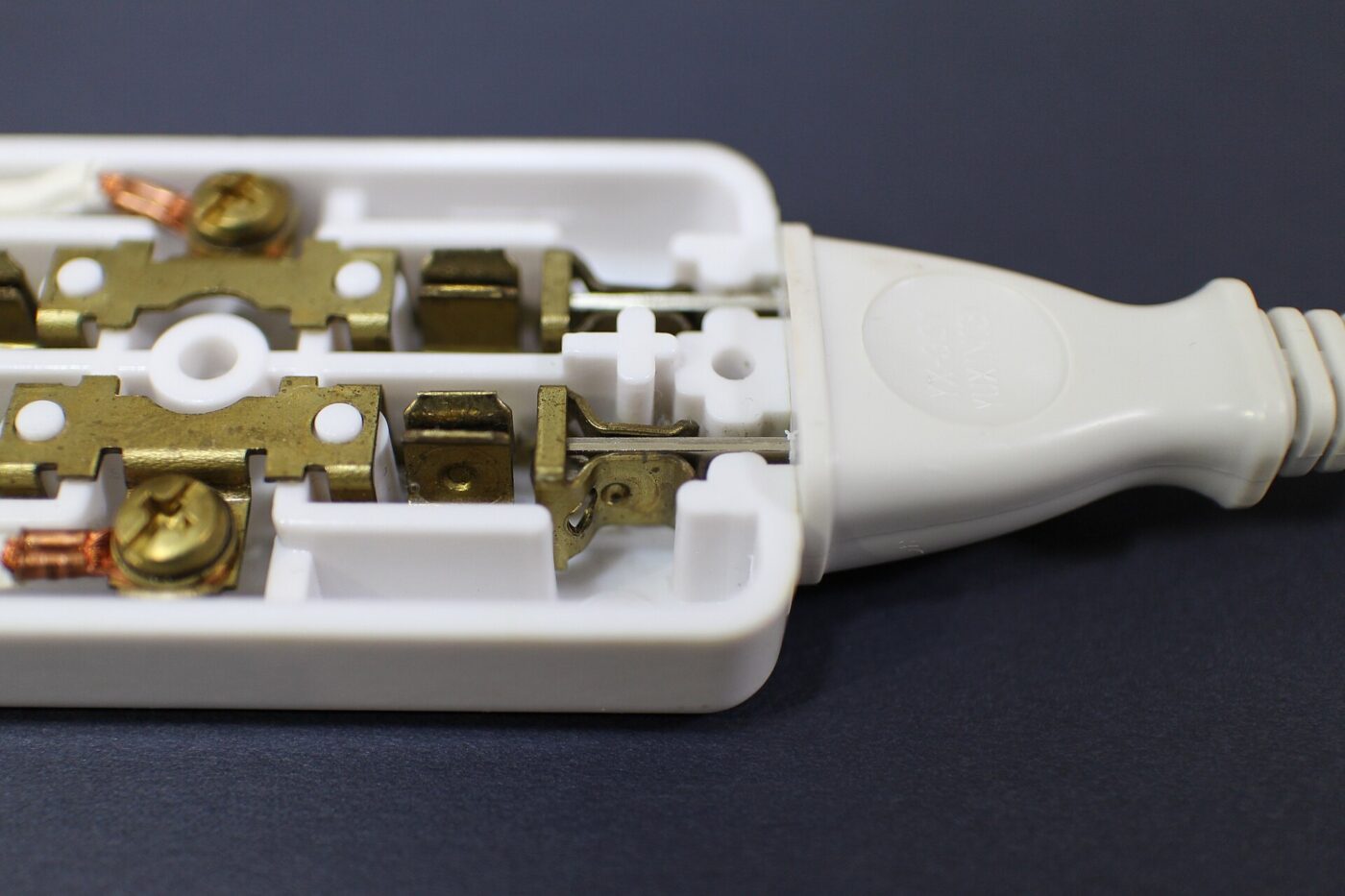
The cheapest useful gift in a house is a decent power strip, and it is where CPSC has been most active in the past 12 months. Notice 26161 of December 18, 2025 covers about 11,200 ANNQUAN strips sold on Amazon; notice 26194 of January 15, 2026 covers about 1,320 HEZI strips; notice 26346 of March 26, 2026 covers about 5,543 CCCEI strips. Two of the three say the same thing: the strips do not contain supplementary overcurrent protection, creating a risk of fire if overloaded. The third says the metal enclosure is ungrounded, an electrocution hazard if energized.
The standard those defects are measured against is UL 1363, Relocatable Power Taps, whose active Edition 6 was published and ANSI-approved on July 13, 2023, covering indoor cord-and-plug-connected taps rated 250 V AC or less and 20 amperes or less. The CCCEI notice is instructive: CPSC reproduces a back label reading “Relocatable Power Taps” with the standard cautions, on a product that failed the construction the phrase implies. Printed words are not a listing mark.
None of this is a legal requirement. In its 2020 electrical products briefing CPSC staff state there are two mandatory standards for electrical products under the agency’s jurisdiction — 16 CFR part 1505 for electric operated toys and 16 CFR part 1204 for CB base-station antennas — and that third-party certification is not required other than for electric toys. Extension cords are handled differently, as a Section 15(j) listed item under UL 817, where missing wire size, strain relief or polarization makes a cord a substantial product hazard.
On a cheap strip, look for a listing mark from a recognized laboratory, not for the words on the label.
What this budget buys, stated in specifications
Translating a budget into specifications is the only honest way to write about a price band without printing prices: at this level you are buying single-function products with one or two numbers on them, and the discipline is to find the number.
For a flashlight it is the ANSI/PLATO FL 1 set. Streamlight’s own explanation, read October 1, 2026, describes the 2016 edition and lists the six measures — light output in lumens, runtime, peak beam intensity, beam distance in meters at 0.25 lux, impact resistance and water resistance — and states something gift buyers should know: adherence is strictly voluntary and each company tests its own product. PLATO announced a revised 2025 edition on February 2, 2026, adding a turbo-mode test. A lumen figure with the FL 1 icons beside it is comparable with another FL 1 figure; a lumen figure alone is a number the seller chose.
For a surge-protecting strip it is the joule rating and a UL 1449 listing, taken apart in the joule rating explainer. For anything battery powered it is the cell format and what replacements cost over a year, tracked in AA battery prices. And for the most-used cheap gift in a cold house, it is the gap a draft stopper closes, compared in under-door draft stoppers.
Stocking stuffers that are legally toys
Much of what sells in this band is a toy in law even when bought for an adult. Toys must comply with ASTM F963-23 as incorporated by 16 CFR part 1250, amended as at 90 FR 57855 on December 12, 2025, and water bead toys carry their own requirements at section 1250.4. Anything containing a button or coin cell falls under 16 CFR part 1263, which requires compliance with ANSI/UL 4200A, approved August 30, 2023, under Reese’s Law; those requirements took effect October 23, 2023.
We have covered each and will not restate them. The entry points are the water bead rule, buying toys with batteries and the 2026 toy recall surge. The point for a budget list is narrower: the cheapest novelties are those where a coin cell sits behind a cover a child can open. Notice 24363 of September 12, 2024 recalled fort kits because the included flashlight violated the mandatory federal battery-operated toy regulation.
The lead rule is the other worth knowing by number. Under 16 CFR part 1303, paint on toys and articles intended for children, and on furniture for consumer use, may not exceed 0.009 percent lead by weight of the dried film, a limit Congress cut from 0.06 percent from August 14, 2009. Several children’s water bottle recalls on the file are lead paint violations rather than mechanical failures.
If a coin cell is reachable without a tool, the product is a 16 CFR 1263 problem regardless of who it was bought for.
Mugs, bottles and the failure that keeps repeating

Insulated drinkware is the other staple here, and its recall history is strikingly specific. A product-name search on travel mug returned six records and water bottle returned 24. The largest is notice 25063 of December 12, 2024: Stanley recalled about 2.6 million Switchback and Trigger Action travel mugs whose lid threads could shrink under heat and torque and release the lid, with 91 reports worldwide and 38 burn injuries. The 2020 YETI Rambler notice is also a lid.
Children’s bottles fail at the same place for a different reason. Contigo recalled about 5.7 million kids’ bottles in 2019 and reannounced in 2020 because the clear silicone spout could detach and choke a child. Klean Kanteen recalled 1.2 million spouts, Pottery Barn Kids a sip top that pulls off, Zak Designs a straw in a flip-top cap. The vessel is almost never the problem.
So look at the closure: how the lid threads, whether the drinking part is a separate soft component, and whether the maker publishes a replacement lid program. That check maps onto the failure the federal file keeps recording.
A five-minute check before you order
Search the product type in the CPSC database, which is free and keyed on product name. Look for a listing mark from a recognized laboratory on anything that plugs in; treat printed standard language as decoration. Find one published number you could compare: lumens with the FL 1 marks, joules with a UL 1449 listing, a capacity in milliamp-hours. If the page offers no number, you are buying a photograph.
Then check who is selling it. All three power strip recalls named sellers most buyers would not recognize, and all three reached consumers through online marketplaces. Notice whether a company would still exist if you needed a remedy.
And the limit, stated plainly: none of this makes a cheap gift safe. A recall notice records which products were found to fail; in a band this crowded, an empty search often means nobody has looked.
One comparable published number, one listing mark, one database search. If any is missing, so is the evidence.
What to watch next
- Whether power strip notices continue past the three issued between December 2025 and March 2026, free to recheck in the CPSC database
- Whether marketplace sellers start publishing the UL 1363 edition rather than reproducing its label wording
- Whether more drinkware makers offer a published replacement lid program, as Stanley’s 2024 remedy amounted to
Where to start
Paid links: we earn a commission if you buy through the buttons below, at no extra cost to you. As an Amazon Associate I earn from qualifying purchases.
Budget gift types compared on the published number that matters
| Product type | Good fit for | Where to look |
|---|---|---|
| Surge protecting power strip | Fits a desk or a nightstand | See listings on AmazonOpens Amazon search results, not one listing: check the model on the product page. |
| Pocket LED flashlight | Fits a glovebox or a drawer | See listings on AmazonOpens Amazon search results, not one listing: check the model on the product page. |
| Insulated travel mug | Fits a daily commute | See listings on AmazonOpens Amazon search results, not one listing: check the model on the product page. |
Product types that fit the trend described above, not tested models. Check the exact listing before you buy. How we pick them.
Surge protecting power strip
Where to look: Amazon
UL 1363 Edition 6 covers power taps rated 250 V AC and 20 A or less. Two recent notices are missing overcurrent protection; the third is an ungrounded metal enclosure.
- A joule rating is comparable across brands
- UL 1449 listing is easy to verify
- Three CPSC notices in ten months
- Label wording is not a listing mark
Pocket LED flashlight
Where to look: Amazon
Streamlight states that FL 1 adherence is voluntary and each company tests its own product. The marks still make two lumen figures comparable; bare numbers are not.
- ANSI FL 1 gives six comparable measures
- No flashlight notice in the last 12 months
- FL 1 testing is self-conducted and voluntary
- Coin cell models fall under 16 CFR 1263
Insulated travel mug
Where to look: Amazon
Notice 25063 covered about 2.6 million Stanley mugs whose lid threads could shrink and release the lid. Across the file the closure fails far more often than the vessel.
- Used more than almost any other cheap gift
- Replacement lids are often sold separately
- The lid is the repeated failure point
- Children models add a choking hazard
More: Home and Kitchen trends and how the Trend Signal is scored.
Sources
- ANNQUAN Power Strips Recalled — CPSC
- HEZI Power Strips Recalled — CPSC
- CCCEI Power Strips Recalled — CPSC
- Stanley Recalls 2.6 Million Travel Mugs — CPSC
- Recall database REST web service — CPSC
- Electrical Products briefing transcript — CPSC
- UL 1363, Relocatable Power Taps — UL Standards
- 16 CFR part 1303, lead-containing paint ban — eCFR
- 16 CFR part 1263, button cell batteries — eCFR
- 16 CFR part 1250, safety standard for toys — eCFR
- ANSI/PLATO FL 1 flashlight standard — Streamlight
- Publication of the revised flashlight standard — PLATO
Questions readers ask
What standard covers power strips in the United States?
UL 1363, Relocatable Power Taps, whose active Edition 6 was published and ANSI-approved on July 13, 2023, covering indoor cord-and-plug-connected taps rated 250 V AC or less and 20 amperes or less. It is voluntary: CPSC staff stated in 2020 that mandatory electrical standards exist only for electric operated toys and CB base-station antennas.
Do cheap flashlights have to publish honest lumen figures?
No. The ANSI/PLATO FL 1 Flashlight Basic Performance Standard defines light output, runtime, peak beam intensity, beam distance, impact resistance and water resistance, but Streamlight states on its own standards page that adherence is strictly voluntary and each company conducts its own testing.
What is the lead limit for paint on a cheap toy or a wooden gift?
Under 16 CFR part 1303, paint and similar surface coatings on toys and other articles intended for children, and on furniture for consumer use, may not exceed 0.009 percent lead by weight of the dried film. That replaced the earlier 0.06 percent threshold from August 14, 2009.
Why do so many drinkware recalls involve the lid?
Because the lid carries the seal, the thread and any soft drinking component, and all three can fail under heat or wear. CPSC notice 25063 of December 12, 2024 recalled about 2.6 million Stanley travel mugs whose lid threads could shrink.